Fluid Power World

  • Home
  • Technologies
    • Hydraulics
      • Cylinders & Actuators
      • Filtration/Contamination Control
      • Fittings, Couplings & Adapters
      • Fluids
      • Fluid Conditioning
      • Hose & Tubing
      • Pumps & Motors
      • Related Technologies
      • Sealing
      • Sensors & Gauges
      • Valves & Manifolds
    • Pneumatics
      • Air Preparation & Regulation
      • Compressed Air Technologies
      • Cylinders & Actuators
      • End Effectors & Grippers
      • Fittings, Couplings & Adapters
      • Hose & Tubing
      • Sensors
      • Vacuum
      • Valves & Manifolds
  • Engineering Basics
  • Trending
  • Resources
    • Digital Issues
    • Pneumatics Tech Toolbox
    • Podcasts
    • Special Reports
    • Subscribe to Fluid Power World Print Magazine
    • Videos
    • Webinars / Digital Events
    • White Papers
  • Women in Engineering
    • Women in Fluid Power
    • Women in Engineering
  • Design Guides
  • Classrooms
    • Hydraulic Filtration
    • Hydraulic System Design
    • Pneumatics Classroom
  • Advertisers
    • Advertise
    • PR Submissions
    • Eblast Submissions
  • SUBSCRIBE

A primer on hydraulic pilot valves

By Mary Gannon | October 10, 2024

Share

Sometimes valves are actuators, and those actuators need valves. Sounds confusing, I know, but hear me out. With few exceptions, most hydraulic valves have at least some type of behavior that mimics a cylinder. A spool inside of a valve has surfaces that look like an annular piston (Figure 1), and poppets tend to look like a piston rod assembly or even just a floating, spring-biased piston.

When a valve is sized appropriately for reasonable flow and pressure, it’s easy to move that spool or poppet using solenoids or levers. Cartridge valves, D03 and D05 valves, inline body valves and any other small valve you can imagine will quickly shift its spool or poppet by throwing a magnetic field around its plunger. And, of course, we know you never skip arm day at the gym, so operating a lever valve is no big deal for you.
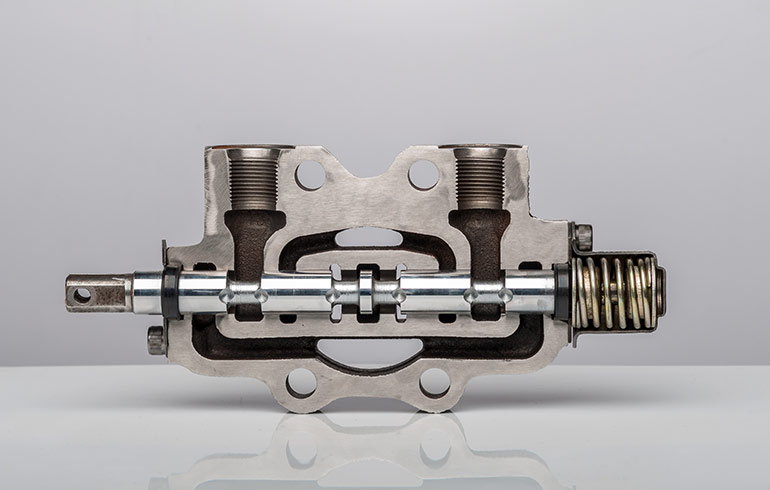
Figure 1. A spool inside of a valve has surfaces that look like an annular piston, and poppets tend to look like a piston rod assembly or even just a floating, spring-biased piston.

The problem begins when you cram more flow (30 gpm and up) through the valve, especially at high pressure. When you upside your valve to increase flow capacity, you also increase the diameter of the spool (we’ll discuss big poppets later). A larger spool means larger spool grooves and, therefore, larger “pistons” for flow forces to act upon.

Flow forces are multi-faceted, but it’s essentially the effect that moving pressurized fluid through a valve increases the difficulty of shifting the valve. Fluid inertia/velocity, pressure differential between grooves, and spool geometry all play a part in the resulting flow forces. With a lever valve, it can become difficult to shift a lever as flow forces increase, but the solution is straightforward — throw a big ‘ol slot machine-sized lever on it.

However, a solenoid’s capacity to shift a valve is limited, especially with large springs that must keep a valve offset or centered in the face of massive flow. So, rather than directly act upon the spool to shift the valve, we treat it like a cylinder and shift it hydraulically using a smaller valve. A pilot-operated valve, such as a D03 valve with an orifice to limit flow, performs just as it was moving a cylinder.
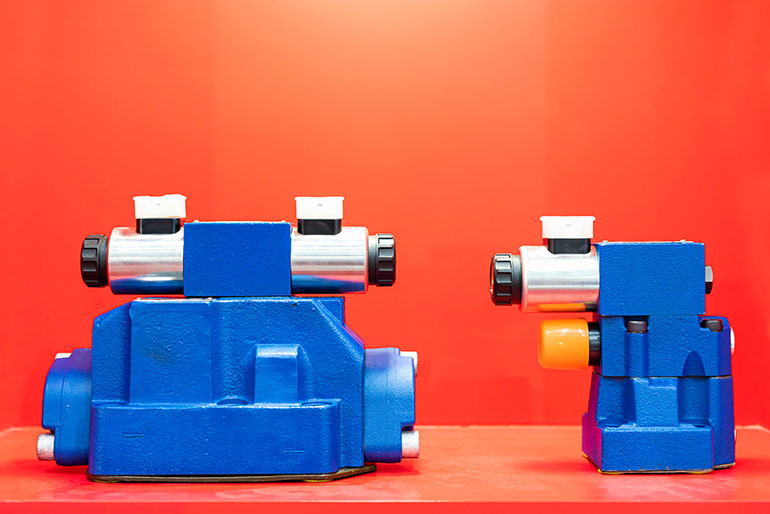
Figure 2. A look at pilot valves, which are installed on top of a main stage valve.

The construction requires extra porting for the valve, which is installed atop the main stage valve (Figure 2). Pilot passages lead to either end of the main stage spool, where the pilot and spring assembly replace the solenoid assembly. Activating the pilot solenoid valve sends fluid to one side of the main stage spool, shifting the valve and allowing hundreds or even thousands of gallons of flow per minute.

To achieve thousands of gpm, you’ll have to step away from spool valves for a moment. The slip-in cartridge valve is a type of component installed into a larger, machined manifold where flow forces are so high that most valves must be pilot-operated. You must install these valves as a quartet to mimic your typical 4/3 valve, but once done, create circuits capable of 3,000 gpm. These valves are shaped to operate efficiently, and you can even control those four valves with a single D03, but it would be impossible to create such a circuit with direct-acting solenoids.

Pilot valves aren’t limited to directional valves, of course. Most pressure valves benefit from pilot operation, even at smaller sizes. A direct-acting relief valve, for example, must use a strong spring to resist the high-pressure forces attempting to open the path to tank. But if you instead used a softer spring with its chamber directed to a smaller pilot valve, the performance also increases. You can expect more precise, reliable control with lower pressure override.

To bring it all together, we can summarize a pilot valve as simply a small valve that operates a larger valve. They come in many shapes and sizes and help us achieve high performance despite the challenges of high-flow, high-pressure circuits.


Filed Under: Engineering Basics, Featured, Mobile Hydraulic Tips, Valves & Manifolds


About The Author

Mary Gannon

Mary Gannon is editor of Fluid Power World. She has been a technical writer and editor for more than 13 years, having covered fluid power, motion control and interconnect technologies.

Current Digital Issue

Fluid-Power-World-October-2026-issue-Cover-feature-image-template-copy

  A note from the editor In our October issue of Fluid Power World, my commentary takes a look at the growing role of automation and sensors in mobile machinery, where OEMs are increasingly focused on automating specific functions and improving machine performance rather than chasing fully autonomous equipment. Josh Cosford gets cheeky comparing the auto…

View Back Issues

Subscribe!

Fluid Power World is written by engineers for engineers engaged in designing machines and or equipment in Off-Highway, Oil & Gas, Mining, Packaging, Industrial Applications, Agriculture, Construction, Forestry, Medical and Material Handling. Fluid Power World covers pneumatics, mobile hydraulics and industrial hydraulics.

Fluid Power Design Guides

fluid
“fpw
EXPAND YOUR KNOWLEDGE AND STAY CONNECTED
Get the latest info on technologies, tools and strategies for Fluid Power Professionals.

RSS feed: Featured White Papers Featured White Papers

  • Moving fluid power forward
  • High-force linear motion: How to convert from hydraulic cylinders to electric actuators and why.
  • A technical comparison: Performance of pneumatic cylinders and electric rod actuators
Fluid Power World
  • Hose Assembly Tips
  • Mobile Hydraulic Tips
  • Pneumatic Tips
  • Sealing & Contamination Control Tips
  • About us
  • Contact Us

Copyright © 2026 Arrowfly LLC. All Rights Reserved. The material on this site may not be reproduced, distributed, transmitted, cached or otherwise used, except with the prior written permission of Arrowfly
Privacy Policy | Advertising | About Us

Search Fluid Power World

  • Home
  • Technologies
    • Hydraulics
      • Cylinders & Actuators
      • Filtration/Contamination Control
      • Fittings, Couplings & Adapters
      • Fluids
      • Fluid Conditioning
      • Hose & Tubing
      • Pumps & Motors
      • Related Technologies
      • Sealing
      • Sensors & Gauges
      • Valves & Manifolds
    • Pneumatics
      • Air Preparation & Regulation
      • Compressed Air Technologies
      • Cylinders & Actuators
      • End Effectors & Grippers
      • Fittings, Couplings & Adapters
      • Hose & Tubing
      • Sensors
      • Vacuum
      • Valves & Manifolds
  • Engineering Basics
  • Trending
  • Resources
    • Digital Issues
    • Pneumatics Tech Toolbox
    • Podcasts
    • Special Reports
    • Subscribe to Fluid Power World Print Magazine
    • Videos
    • Webinars / Digital Events
    • White Papers
  • Women in Engineering
    • Women in Fluid Power
    • Women in Engineering
  • Design Guides
  • Classrooms
    • Hydraulic Filtration
    • Hydraulic System Design
    • Pneumatics Classroom
  • Advertisers
    • Advertise
    • PR Submissions
    • Eblast Submissions
  • SUBSCRIBE