Fluid Power World

  • Home
  • Technologies
    • Hydraulics
      • Cylinders & Actuators
      • Filtration/Contamination Control
      • Fittings, Couplings & Adapters
      • Fluids
      • Fluid Conditioning
      • Hose & Tubing
      • Pumps & Motors
      • Related Technologies
      • Sealing
      • Sensors & Gauges
      • Valves & Manifolds
    • Pneumatics
      • Air Preparation & Regulation
      • Compressed Air Technologies
      • Cylinders & Actuators
      • End Effectors & Grippers
      • Fittings, Couplings & Adapters
      • Hose & Tubing
      • Sensors
      • Vacuum
      • Valves & Manifolds
  • Engineering Basics
  • Trending
  • Resources
    • Digital Issues
    • Pneumatics Tech Toolbox
    • Podcasts
    • Special Reports
    • Subscribe to Fluid Power World Print Magazine
    • Videos
    • Webinars / Digital Events
    • White Papers
  • Women in Engineering
    • Women in Fluid Power
    • Women in Engineering
  • Design Guides
  • Classrooms
    • Hydraulic Filtration
    • Hydraulic System Design
    • Pneumatics Classroom
  • Advertisers
    • Advertise
    • PR Submissions
    • Eblast Submissions
  • SUBSCRIBE

Air compressor failures — fix or replace?

By Paul Heney | November 17, 2025

Share

By Ron Marshall

When the main compressor at Bill’s machine shop suddenly failed, the entire plant seemed to grind to a halt. Operators stood idle, production schedules slipped, and the pressure was on to make a quick decision. Bill gathered his maintenance crew in the break room, where they weighed their options: repair the aging compressor or invest in a new one.

The repair quote was hefty, but still lower than buying new equipment. Bill’s maintenance lead pointed out that the machine had already logged years of heavy service and that a major failure like this might be a warning sign of more trouble to come.

“If we fix it now, what happens when the next big part goes?” he asked.

Everyone knew that downtime was costing the company thousands of dollars every hour.

On the other hand, purchasing a new compressor was a significant capital expense. Bill called in a local supplier to discuss options. The sales engineer explained that newer models offered significant energy savings over the old. He introduced the concept of specific power, essentially the gas mileage rating for compressors. The new unit could produce the same amount of air while using less electricity. Over 10 years of operation, the energy savings alone could outweigh the cost difference between repair and replacement.

Bill also learned about improvements in controls and reliability. Modern compressors came with advanced monitoring, better cooling, and integrated diagnostics. These features would allow his team to spot potential issues before they became costly breakdowns. The idea of running blind with an older machine, hoping it would hold together, suddenly seemed risky.
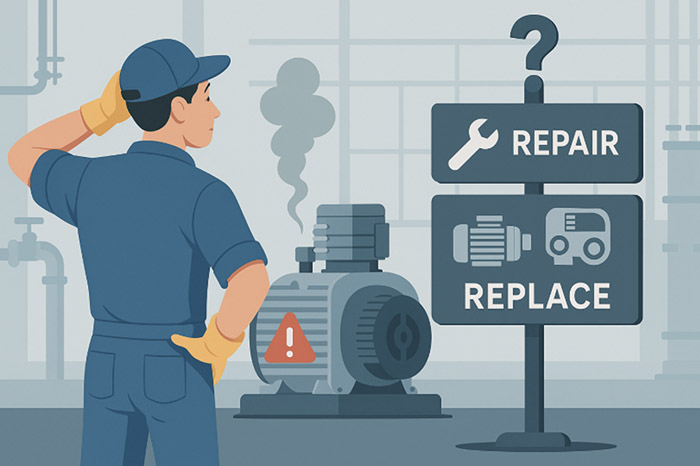
Fig. 1. It is often false economy to try to fix an old air compressor. Newer models are often significantly more efficient, often saving the difference in purchase price in a very short time.

Still, the decision wasn’t easy. The repair could be completed in days, while ordering and installing a new unit would take weeks. But Bill realized that he had to think beyond the immediate crisis. He asked the supplier to calculate the total cost of ownership, including purchase price, energy consumption, and projected maintenance over the life of the compressor. The numbers were clear: while the repair seemed cheaper up front, the new machine would save the company far more in the long run.

Bill presented the analysis to the company’s management team. He explained the risks of relying on old equipment and the advantages of investing in modern technology. The decision was approved: they would replace the compressor. The new unit arrived, and after installation, the difference was immediately noticeable. System pressure was more stable, energy bills dropped, and operators had more confidence in their equipment.

Looking back, Bill was glad the old machine had failed when it did. The breakdown forced the company to re-examine their approach and invest in efficiency and reliability. His experience taught him that in compressed air systems, short-term fixes are sometimes more expensive than long-term solutions.

For plant operators facing the same dilemma, Bill’s story carries a simple lesson: don’t just ask, “What will it cost me today?” Ask instead, “What will it save me tomorrow?” That perspective can turn a crisis into an opportunity for lasting improvement.


Filed Under: Air Compressors, Air Preparation, Components, Compressed Air Technologies, Pneumatic Tips


About The Author

Paul Heney

Current Digital Issue

Fluid-Power-World-November-2026-issue-Cover-feature-image-template-copy

A note from the editor This issue takes a look at some of the practical challenges engineers face when designing, maintaining and troubleshooting fluid power systems. Our Design Notes feature explores the particularly harsh environment of tunnel boring machines, where moisture and contamination can quickly become reliability problems. Eaton’s filtration expert weighs in here on…

View Back Issues

Subscribe!

Fluid Power World is written by engineers for engineers engaged in designing machines and or equipment in Off-Highway, Oil & Gas, Mining, Packaging, Industrial Applications, Agriculture, Construction, Forestry, Medical and Material Handling. Fluid Power World covers pneumatics, mobile hydraulics and industrial hydraulics.

Fluid Power Design Guides

fluid
“fpw
EXPAND YOUR KNOWLEDGE AND STAY CONNECTED
Get the latest info on technologies, tools and strategies for Fluid Power Professionals.

RSS feed: Featured White Papers Featured White Papers

Fluid Power World
  • Hose Assembly Tips
  • Mobile Hydraulic Tips
  • Pneumatic Tips
  • Sealing & Contamination Control Tips
  • About us
  • Contact Us

Copyright © 2026 Arrowfly LLC. All Rights Reserved. The material on this site may not be reproduced, distributed, transmitted, cached or otherwise used, except with the prior written permission of Arrowfly
Privacy Policy | Advertising | About Us

Search Fluid Power World

  • Home
  • Technologies
    • Hydraulics
      • Cylinders & Actuators
      • Filtration/Contamination Control
      • Fittings, Couplings & Adapters
      • Fluids
      • Fluid Conditioning
      • Hose & Tubing
      • Pumps & Motors
      • Related Technologies
      • Sealing
      • Sensors & Gauges
      • Valves & Manifolds
    • Pneumatics
      • Air Preparation & Regulation
      • Compressed Air Technologies
      • Cylinders & Actuators
      • End Effectors & Grippers
      • Fittings, Couplings & Adapters
      • Hose & Tubing
      • Sensors
      • Vacuum
      • Valves & Manifolds
  • Engineering Basics
  • Trending
  • Resources
    • Digital Issues
    • Pneumatics Tech Toolbox
    • Podcasts
    • Special Reports
    • Subscribe to Fluid Power World Print Magazine
    • Videos
    • Webinars / Digital Events
    • White Papers
  • Women in Engineering
    • Women in Fluid Power
    • Women in Engineering
  • Design Guides
  • Classrooms
    • Hydraulic Filtration
    • Hydraulic System Design
    • Pneumatics Classroom
  • Advertisers
    • Advertise
    • PR Submissions
    • Eblast Submissions
  • SUBSCRIBE