
I once configured a hydraulic power unit for an automotive customer that had so many components attached and installed that it looked like the engine bay on a new BMW M5 with the plastic cover removed. I used the word “configured” rather than “designed” because the end customer had a Functional Requirements Specification document that…
A designer’s guide to pneumatic valves
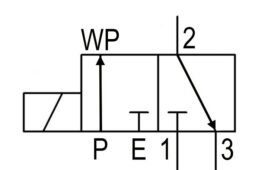
Directional control valves are the traffic police of pneumatic systems, charged with diverting, directing, and reversing airflow to manage the operation of actuators. A fluid power designer must first understand valve functions, flow rates (and the resulting sizes), and the construction materials best suited to their application before sending out requests for quotes. This designer’s […]
A designer’s guide to hydraulic valves
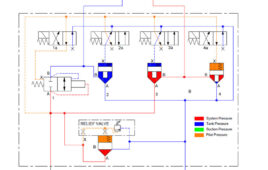
Valves are the fluid power designer’s calling card. Every hydraulic system has a pump supplying hydraulic energy to any combination of cylinders and motors, but the myriad possible combinations of valve technology offer a number so large only to be eclipsed by chessboard possibilities. This article provides a guide to the valve technologies available, allowing…
Unconventional KPIs to keep your hydraulic system running optimally

I don’t even have to ask — I know you’re already datalogging your power unit’s particle counter to track contamination levels, and you’re using the latest wireless pressure transducers and flow meters to track case drain pressure and flow. Perhaps you have another half-dozen metrics that your custom maintenance software automatically tracks, including mean time…
A designer’s guide to hydraulic motors
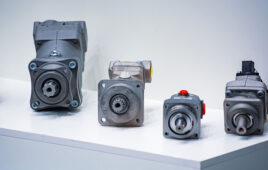
By Josh Cosford, Contributing Editor Hydraulic motors are powerful and energetically dense rotary actuators with designs as versatile as their applications. As a hydraulic designer, you should know how to select a hydraulic motor that best suits your machine, balancing performance, price, and reliability. The range of options is vast, but this guide will steer…
Designing your hydraulic systems for winter

By Josh Cosford, Contributing Editor Hydraulic machines hate the cold just as much as the average retired snowbird does. However, a ski slope groomer doesn’t have the luxury of living from November to April in Florida or Arizona to avoid shoveling, brushing off, or walking in snow. Quite the opposite, actually, since no ski resort […]
A designer’s guide to hydraulic pumps
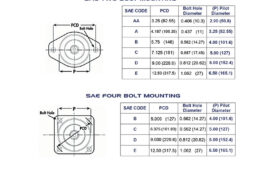
As an engineer, hydraulic specialist or budding designer, knowledge of the various hydraulic pump options is imperative to provide your company or customers with the best possible option for any given machine. Despite personal preference for each pump type, dismissing any given design can potentially reduce system effectiveness or result in excessive costs. A gear…
When should you completely drain your hydraulic system and why?
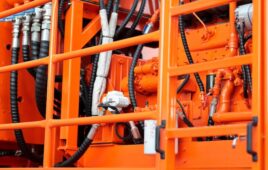
By Josh Cosford, Contributing Editor If you work with a hydraulic technician who services and repairs hydraulics, especially including work on power units, leave this article for a moment and go ask them, “What’s the craziest thing you’ve seen inside an old reservoir?” My own answer isn’t so memorable; it’s just a half-collapsed suction filter […]
A designer’s guide to hose assemblies
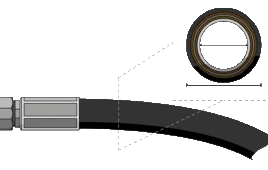
Like their fitting and adapter brethren, hydraulic hose assemblies are often an afterthought to the hydraulic designer. I’d rather be working on crafting a unique hydraulic circuit as well, but we shouldn’t forget the importance of a holistic approach to machine design. Your fluid power technicians are an essential piece of the puzzle to ensure […]
How to stop hose expansion in its tracks
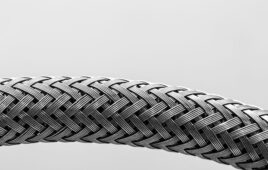
By Josh Cosford, Contributing Editor I’ll bet you didn’t even know hose expansion was a thing, did you? Sure, we know that hydraulic hose is made primarily from synthetic rubber, which is pliable and soft. Indeed, the whole point of using rubber is to add flexibility to the plumbing routing options, literally and figuratively. The […]
AI is just a party trick

Thanksgiving is over, and now we’re in that weird pocket of reduced productivity until January, when we’ve finally digested six weeks’ worth of holiday feast. Sure, we get by and look busy, which explains why I get more walk-in cold calls during this period than the rest of the year combined. It’s not that I…
How does moisture affect pneumatic systems and how do we mitigate it?

By Josh Cosford, Contributing Editor Desiccant, membrane, deliquescent, centrifugal and refrigerated air dryers are all technologies used to dry our compressed air systems. They are installed in various locations throughout the plant, although downstream of the compressor is the most critical location. Compressing air collects the volume of moisture found in a cubic foot of […]
What types of end effectors are used in robotics?

In the world of robotics and automation, an end effector is a critical component that enables robots to interact with their environment. Also known as an end-of-arm tool (EOAT), the end effector is mounted on a linear actuator or robot arm and is responsible for performing specific tasks such as gripping, welding, cutting, or sensing.…
Can just anyone troubleshoot hydraulics?

By Josh Cosford, Contributing Editor I’m not going to lie, I’m pretty good at troubleshooting hydraulics. It wasn’t always that way, of course. When I was with my previous employer, I recall my first customer visit in 2008, where I was expected to resolve their cylinder issue. It was a drill rig. They couldn’t get…
Open letter to inside sales professionals

It’s about time we talked — no, not about how much time you spend on your phone — that’s between you and the sales manager. You and I need to talk about your customer service and communication. I’ve been in the game long enough to have communicated with thousands of customers and fellow sales professionals,…
When should you use hydrostatic pumps?
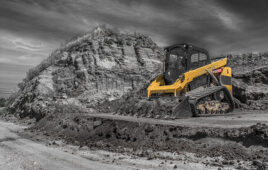
The term hydrostatic refers to the fundamental concept we hold dear in fluid power, which is that confined hydraulic fluid under pressure exists in equilibrium and balance. Although hydraulic fluid does no more than hold objects stationary without the active application of force through a pumping device, the concept is entirely different than hydrodynamics, which […]
Industrial hydraulic maintenance tips

Spring is around the corner, although if you’re located near the Great Lakes, you might need convincing that winter ever came this year at all. Regardless, the page on my desktop calendar is March, which makes a perfect time to schedule a spring maintenance session for your industrial hydraulic equipment. Even if you enjoy a…
Is it possible to max out pressure?

I’ve written much about pressure lately, discussing subjects such as the upper reasonable limits in hydraulics to shockingly high-pressure fuel injection systems. Regarding current or conceivable limits, I see no reason we can’t exceed 7,000 bar with commercially available machinery, such as water jet cutters. For the sake of simplicity and lower digits, I’m expressing…
Safety tips for connecting and disconnecting hydraulic hose

By Josh Cosford, Contributing Editor Hydraulic hoses are crucial in various fluid power industries, helping power heavy machinery and equipment by providing the very conduit through which hydraulic fluid flows. The integrity of these systems relies heavily on the proper connection and disconnection of hydraulic hoses, as mishandling hydraulic hoses can lead to severe accidents […]
Making headway with hydraulic digital integration

Digital technologies allow for precise, highly responsive and efficient hydraulic control. By Josh Cosford, Contributing Editor In the era of Industry 4.0, where the integration of digital technologies is transforming the manufacturing landscape, on-board electronic controllers play a pivotal role in enhancing the efficiency and precision of hydraulic systems. These controllers, embedded within hydraulic valves…
Is the sequence valve obsolete?
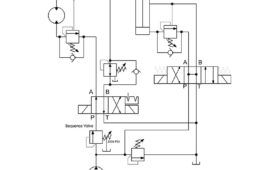
By Josh Cosford, Contributing Editor We don’t hear much anymore regarding sequence valves, and probably for good reason. A sequence valve is like a self-regulating inline relay that opens when work pressure overrides the spring setting. It’s a form of hydraulic automation that provides sequential operation for two or more functions using one fluid supply…
What is the difference between industrial and hydraulic hose?
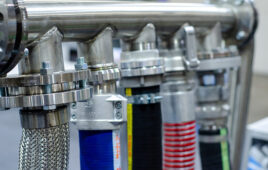
By Josh Cosford, Contributing Editor Technically speaking, hydraulic hose is often also industrial hose, but for the sake of this article, I will define what makes them different in both construction and application. We could call out industrial hose for its use in mobile machinery as well, although I’m not here to make beef, so […]
Will this crazy motor concept take off in fluid power?
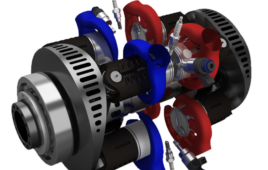
By Josh Cosford, Contributing Editor You may not know this, but I’m a straight-up car fanatic. There are as many car guy tribes as cars, and there are more ways to be into cars without bumper-sticker-level dedication to one brand. Me? I’m a Mazda guy who does the occasional track day, although I lust after […]
5 reasons your pneumatic cylinder isn’t working
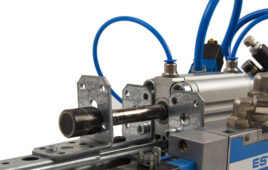
By Josh Cosford, Contributing Editor Pneumatic cylinders are essential in various industrial applications, providing the mechanical force needed to move loads, automate equipment, and perform countless other tasks. However, pneumatic cylinders encounter issues that impede their performance like other machine components. When your pneumatic cylinder isn’t working as expected, it can lead to downtime, reduced […]
What hydraulic pumps are best for electrified systems?

By Josh Cosford, Contributing Editor Before I begin, let me preface this article with my definition of “electrified.” It’s rarer to find a hydraulic machine with no electrical or electronic components, so electrified might be redundant. In this case, I’m discussing the motion control and automation side of hydraulics, where the electric more is more […]