Fluid Power World

  • Home
  • Technologies
    • Hydraulics
      • Cylinders & Actuators
      • Filtration/Contamination Control
      • Fittings, Couplings & Adapters
      • Fluids
      • Fluid Conditioning
      • Hose & Tubing
      • Pumps & Motors
      • Related Technologies
      • Sealing
      • Sensors & Gauges
      • Valves & Manifolds
    • Pneumatics
      • Air Preparation & Regulation
      • Compressed Air Technologies
      • Cylinders & Actuators
      • End Effectors & Grippers
      • Fittings, Couplings & Adapters
      • Hose & Tubing
      • Sensors
      • Vacuum
      • Valves & Manifolds
  • Engineering Basics
  • Trending
  • Resources
    • Digital Issues
    • Pneumatics Tech Toolbox
    • Podcasts
    • Special Reports
    • Subscribe to Fluid Power World Print Magazine
    • Videos
    • Webinars / Digital Events
    • White Papers
  • Women in Engineering
    • Women in Fluid Power
    • Women in Engineering
  • Design Guides
  • Classrooms
    • Hydraulic Filtration
    • Hydraulic System Design
    • Pneumatics Classroom
  • Advertisers
    • Advertise
    • PR Submissions
    • Eblast Submissions
  • SUBSCRIBE

Can I heat my seals to ease installation?

By Mary Gannon | June 30, 2025

Share

By Josh Cosford, Contributing Editor

Here at Higginson Equipment, we produce a line of cylinders for the dump truck industry known as EconoMAX. On any given year, we produce between 7,000 and 8,000 of these for tailgate latch, air tarp systems, and tailgate high-lift applications. Each cylinder contains a T-seal for the piston, two end seals for the tube, a U-cup for the rod and a wiper to protect the internals from external contamination. Most of the seals are Buna Nitrile, but the rod wiper is made of polyurethane, which is hard enough to scrape away dirt and grime from the rod during retraction.

Our EconoMAX area leader, Frank, retired a couple of years ago after a ten-year career. He had fingers like Italian sausages, and was able to install a couple hundred rod wipers in succession with no tools or preparation. Upon his retirement, normal-fingered technicians didn’t have the same strength and stamina to pinch, bend and subsequently stuff the seals into their grooves. But that’s why the specialty tools, as shown in Figure 1, exist, despite being slower and clunky compared to Frank’s manhandling method.

Figure 1. Seal installation tool.

But could we be doing this a better way so that even hand models could tackle wiper installation without blistering? The quick answer is yes because it turns out that heat softens synthetic rubber, making it easier to bend and insert into the seal groove. But the long answer requires clarification on the techniques to do so successfully without damaging the seals, the cylinders or your hands.

There is a Goldilocks zone where the seals are soft enough to improve bending, yet not so hot as to damage the seals or burn your hands. The ideal range is 120-170°F, where the polyurethane becomes sufficiently soft within its maximum temperature range. Wearing gloves is a good idea, not only because 170° is plenty hot for even Frank’s fingers, but to protect your skin from blister-causing friction.

How you heat the seals is nearly as crucial as how hot you make them. Some methods should be avoided at all costs, such as with a propane torch. You simply cannot achieve a homogenous temperature and risk burning or melting the seal. A thermostat-controlled oven might work, but you must be mindful of uneven heat and potential accuracy issues.
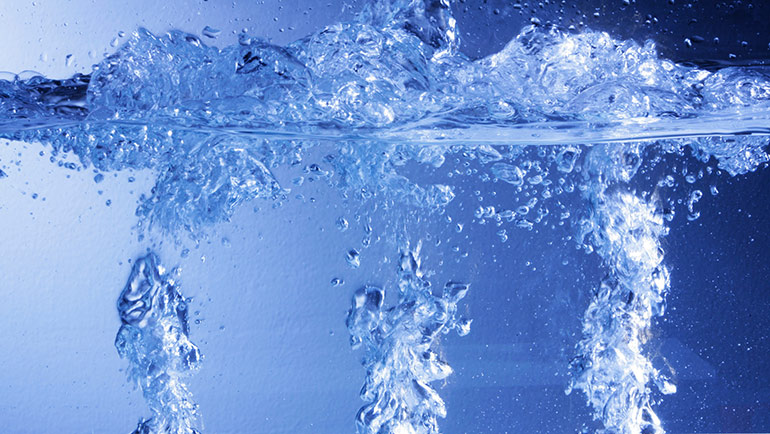
Heating seals with boiling water provides consistent, even heat without the risk of overheating, melting or burning.

The preferred heating method is hot water, which provides consistent, even heat without the risk of overheating, melting or burning. Even if you accidentally heat your seal to boiling point (212°F), it’s not likely to deform or ruin the seal since no pressure or friction is applied during the process. And when you pull your seals from the hot water, simply blowing them off with an air gun leaves them dry, avoiding any contribution to water contamination for hydraulic seals.

Of course, not all seals are made of polyurethane, so what are your options for Buna Nitrile, Viton, or Teflon? For the most part, NBR and Viton are already relatively soft, but for some, harder options are fair game to heating, if needed. Teflon (PTFE) is a different animal, of course, and heating will be a useless endeavor for two reasons. Firstly, it wouldn’t soften significantly even when boiled, and secondly, it’s usually not available in shapes that require bending because it’s so hard.

Heating is an excellent tactic for improving the installation of air and hydraulic seals, especially when they must be bent during installation. Always be careful to avoid overheating to protect the seals from damage and your hands from heating. Not everyone has Frank’s sausage fingers, after all.


Filed Under: Components, Engineering Basics, Featured, Sealing, Sealing & Contamination Control Tips, Seals


About The Author

Mary Gannon

Mary Gannon is editor of Fluid Power World. She has been a technical writer and editor for more than 13 years, having covered fluid power, motion control and interconnect technologies.

Current Digital Issue

Fluid-Power-World-November-2026-issue-Cover-feature-image-template-copy

A note from the editor This issue takes a look at some of the practical challenges engineers face when designing, maintaining and troubleshooting fluid power systems. Our Design Notes feature explores the particularly harsh environment of tunnel boring machines, where moisture and contamination can quickly become reliability problems. Eaton’s filtration expert weighs in here on…

View Back Issues

Subscribe!

Fluid Power World is written by engineers for engineers engaged in designing machines and or equipment in Off-Highway, Oil & Gas, Mining, Packaging, Industrial Applications, Agriculture, Construction, Forestry, Medical and Material Handling. Fluid Power World covers pneumatics, mobile hydraulics and industrial hydraulics.

Fluid Power Design Guides

fluid
“fpw
EXPAND YOUR KNOWLEDGE AND STAY CONNECTED
Get the latest info on technologies, tools and strategies for Fluid Power Professionals.

RSS feed: Featured White Papers Featured White Papers

  • Moving fluid power forward
  • High-force linear motion: How to convert from hydraulic cylinders to electric actuators and why.
  • A technical comparison: Performance of pneumatic cylinders and electric rod actuators
Fluid Power World
  • Hose Assembly Tips
  • Mobile Hydraulic Tips
  • Pneumatic Tips
  • Sealing & Contamination Control Tips
  • About us
  • Contact Us

Copyright © 2026 Arrowfly LLC. All Rights Reserved. The material on this site may not be reproduced, distributed, transmitted, cached or otherwise used, except with the prior written permission of Arrowfly
Privacy Policy | Advertising | About Us

Search Fluid Power World

  • Home
  • Technologies
    • Hydraulics
      • Cylinders & Actuators
      • Filtration/Contamination Control
      • Fittings, Couplings & Adapters
      • Fluids
      • Fluid Conditioning
      • Hose & Tubing
      • Pumps & Motors
      • Related Technologies
      • Sealing
      • Sensors & Gauges
      • Valves & Manifolds
    • Pneumatics
      • Air Preparation & Regulation
      • Compressed Air Technologies
      • Cylinders & Actuators
      • End Effectors & Grippers
      • Fittings, Couplings & Adapters
      • Hose & Tubing
      • Sensors
      • Vacuum
      • Valves & Manifolds
  • Engineering Basics
  • Trending
  • Resources
    • Digital Issues
    • Pneumatics Tech Toolbox
    • Podcasts
    • Special Reports
    • Subscribe to Fluid Power World Print Magazine
    • Videos
    • Webinars / Digital Events
    • White Papers
  • Women in Engineering
    • Women in Fluid Power
    • Women in Engineering
  • Design Guides
  • Classrooms
    • Hydraulic Filtration
    • Hydraulic System Design
    • Pneumatics Classroom
  • Advertisers
    • Advertise
    • PR Submissions
    • Eblast Submissions
  • SUBSCRIBE