Fluid Power World

  • Home
  • Technologies
    • Hydraulics
      • Cylinders & Actuators
      • Filtration/Contamination Control
      • Fittings, Couplings & Adapters
      • Fluids
      • Fluid Conditioning
      • Hose & Tubing
      • Pumps & Motors
      • Related Technologies
      • Sealing
      • Sensors & Gauges
      • Valves & Manifolds
    • Pneumatics
      • Air Preparation & Regulation
      • Compressed Air Technologies
      • Cylinders & Actuators
      • End Effectors & Grippers
      • Fittings, Couplings & Adapters
      • Hose & Tubing
      • Sensors
      • Vacuum
      • Valves & Manifolds
  • Engineering Basics
  • Trending
  • Resources
    • Digital Issues
    • Pneumatics Tech Toolbox
    • Podcasts
    • Special Reports
    • Subscribe to Fluid Power World Print Magazine
    • Videos
    • Webinars / Digital Events
    • White Papers
  • Women in Engineering
    • Women in Fluid Power
    • Women in Engineering
  • Design Guides
  • Classrooms
    • Hydraulic Filtration
    • Hydraulic System Design
    • Pneumatics Classroom
  • Advertise
  • SUBSCRIBE

Compressed air efficiency: The showdown at 86 psi

By Paul Heney | February 9, 2026

Share

By Ron Marshall

It all started on a Tuesday morning. Dave, a seasoned mechanic, walked onto the shop floor and felt something was off. The familiar din of the pneumatic machines sounded … weaker. He glanced at the main compressor gauge. 86 psi. For years, it had been humming along between 90 and 100. He found Sarah, the new maintenance supervisor, who calmly explained it was her call.

“It’s a simple way to cut our energy bill,” she said.

But for Dave, this simple fix felt like a major risk. What about the sudden surges in demand that could bring a production line to a halt?

The case for cutting back
Sarah’s argument was rooted in solid numbers. She explained that for every 2 psi they lowered the pressure, they shaved about 1% off the compressor’s energy bill. That’s a direct saving that goes straight to the bottom line. Furthermore, she pointed out that higher pressure actually creates waste. Every tiny, unregulated leak or open valve in the shop was now consuming less air simply because the pressure was lower. It was a clear, logical case for efficiency. The higher the pressure, the more money was literally vanishing into thin air. Sarah saw the high pressure not as a safety net, but as an expensive habit.

Dave wasn’t convinced. He argued that the extra pressure was their buffer, a crucial reserve of power needed to handle sudden, high-demand tasks without stumbling. To him, risking a production stoppage for a 1% saving felt like a terrible trade-off. This is where the real problem surfaced. The number on the main compressor wasn’t the number that mattered. While the compressor might be putting out 90 psi, the tool at the end of the line could be getting as little as 65 psi. Decades of undersized pipes, aging filters, and inefficient connectors were strangling the airflow, creating massive pressure drops along the way. The high pressure at the start was just a brute-force solution to compensate for an inefficient system.
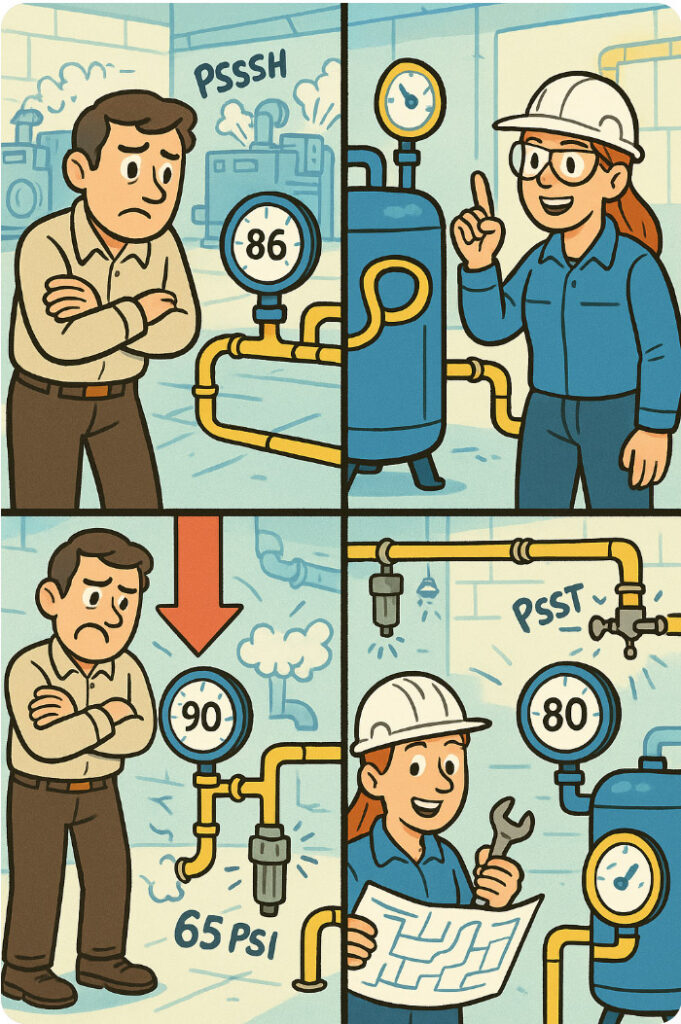
Fig. 1. The journey to lower pressure had surprisingly positive results.

The debate shifted from a simple number to the health of the entire system. Instead of just cranking the pressure back up, Dave took on the challenge. He meticulously mapped the system, identifying the bottlenecks where pressure was being lost. He worked to replace clogged filters, install properly sized piping to key machines, and fix dozens of small leaks. The result was transformative. With the system optimized, a steady 80 psi was now reaching the tools, even with the main compressor set lower than ever before. They discovered the old setting wasn’t a buffer; it was a band-aid. By fixing the system’s core problems, they could run at an even lower pressure, saving more money while improving performance.

The showdown at 86 psi taught them a valuable lesson. True efficiency isn’t just about turning a dial down; it’s about understanding the entire journey from the compressor to the tool. They stopped arguing about a single number and started collaborating on a smarter system, proving that the best savings come from working smarter, not just harder.


Filed Under: Components, Compressed Air Technologies, Pneumatic Tips


About The Author

Paul Heney

Current Digital Issue

Fluid-Power-World-October-2026-issue-Cover-feature-image-template-copy

  A note from the editor In our October issue of Fluid Power World, my commentary takes a look at the growing role of automation and sensors in mobile machinery, where OEMs are increasingly focused on automating specific functions and improving machine performance rather than chasing fully autonomous equipment. Josh Cosford gets cheeky comparing the auto…

View Back Issues

Subscribe!

Fluid Power World is written by engineers for engineers engaged in designing machines and or equipment in Off-Highway, Oil & Gas, Mining, Packaging, Industrial Applications, Agriculture, Construction, Forestry, Medical and Material Handling. Fluid Power World covers pneumatics, mobile hydraulics and industrial hydraulics.

Fluid Power Design Guides

fluid
“fpw
EXPAND YOUR KNOWLEDGE AND STAY CONNECTED
Get the latest info on technologies, tools and strategies for Fluid Power Professionals.

RSS feed: Featured White Papers Featured White Papers

  • Moving fluid power forward
  • High-force linear motion: How to convert from hydraulic cylinders to electric actuators and why.
  • A technical comparison: Performance of pneumatic cylinders and electric rod actuators
Fluid Power World
  • Hose Assembly Tips
  • Mobile Hydraulic Tips
  • Pneumatic Tips
  • Sealing & Contamination Control Tips
  • About us
  • Contact Us

Copyright © 2026 Arrowfly LLC. All Rights Reserved. The material on this site may not be reproduced, distributed, transmitted, cached or otherwise used, except with the prior written permission of Arrowfly
Privacy Policy | Advertising | About Us

Search Fluid Power World

  • Home
  • Technologies
    • Hydraulics
      • Cylinders & Actuators
      • Filtration/Contamination Control
      • Fittings, Couplings & Adapters
      • Fluids
      • Fluid Conditioning
      • Hose & Tubing
      • Pumps & Motors
      • Related Technologies
      • Sealing
      • Sensors & Gauges
      • Valves & Manifolds
    • Pneumatics
      • Air Preparation & Regulation
      • Compressed Air Technologies
      • Cylinders & Actuators
      • End Effectors & Grippers
      • Fittings, Couplings & Adapters
      • Hose & Tubing
      • Sensors
      • Vacuum
      • Valves & Manifolds
  • Engineering Basics
  • Trending
  • Resources
    • Digital Issues
    • Pneumatics Tech Toolbox
    • Podcasts
    • Special Reports
    • Subscribe to Fluid Power World Print Magazine
    • Videos
    • Webinars / Digital Events
    • White Papers
  • Women in Engineering
    • Women in Fluid Power
    • Women in Engineering
  • Design Guides
  • Classrooms
    • Hydraulic Filtration
    • Hydraulic System Design
    • Pneumatics Classroom
  • Advertise
  • SUBSCRIBE