
Hydraulic systems are a fundamental technology in manufacturing and industrial operations. Widely used in applications such as metal forming, plastics processing, heavy equipment, and automated production lines, hydraulics are valued for their high-power density, robustness, and reliability. As energy efficiency becomes an increasingly important consideration across industries, attention is turning toward how hydraulic systems can be designed, operated, and maintained to optimize energy use while preserving their performance advantages.
Energy Use in Hydraulic Systems
Hydraulic systems convert mechanical energy into fluid power and then back into mechanical work. This multi-stage process inherently involves energy transformations, and system efficiency depends on how effectively each stage is managed. Factors such as fluid dynamics, component design, and system configuration all influence overall performance.
Energy consumption in hydraulic systems is not solely a function of component efficiency but also of how systems are sized, controlled, and operated within specific applications. In many industrial contexts, hydraulic systems are designed to ensure reliability and consistent performance across a wide range of operating conditions. This often involves design margins that prioritize stability and responsiveness.
Rather than representing inefficiency, these characteristics reflect the need to balance energy performance with operational requirements such as precision, safety, and durability.
Regulatory and Market Context
Energy efficiency has become a key topic in industrial policy and corporate strategy. Regulatory frameworks in several regions encourage or require improvements in energy performance, while companies are increasingly incorporating efficiency metrics into their procurement and operational decisions.
Within this context, hydraulic systems are evolving alongside other technologies. The focus is enhancing their efficiency and integrating them into broader energy management strategies within industrial facilities.
Technological Developments in Hydraulic Efficiency
Ongoing innovation is enabling hydraulic systems to achieve higher levels of energy efficiency without compromising their core strengths. These developments are often based on improved control strategies, better system integration, and advances in component design.
Variable Speed Drives (VSDs)
The use of variable speed drives in hydraulic power units allows electric motors to adjust their speed according to hydraulic system demand. This approach enables more flexible operation compared to constant-speed configurations, particularly in applications with variable load profiles. By aligning electric motor output with real-time hydraulic requirements, VSDs contribute to more consistent energy usage across different operating conditions.
Load-Sensing and Pressure-Compensated Systems
Load-sensing and pressure-compensated systems are designed to adapt pressure and flow to the needs of the application. These systems continuously monitor operating conditions and adjust output accordingly, supporting stable and efficient operation. Their use is particularly relevant in applications where demand fluctuates or where precise control is required.
Electrohydraulic Systems
The integration of electronic control with hydraulic components enables a higher level of system coordination. Sensors and digital controllers provide continuous feedback, allowing for real-time adjustment of operating parameters.
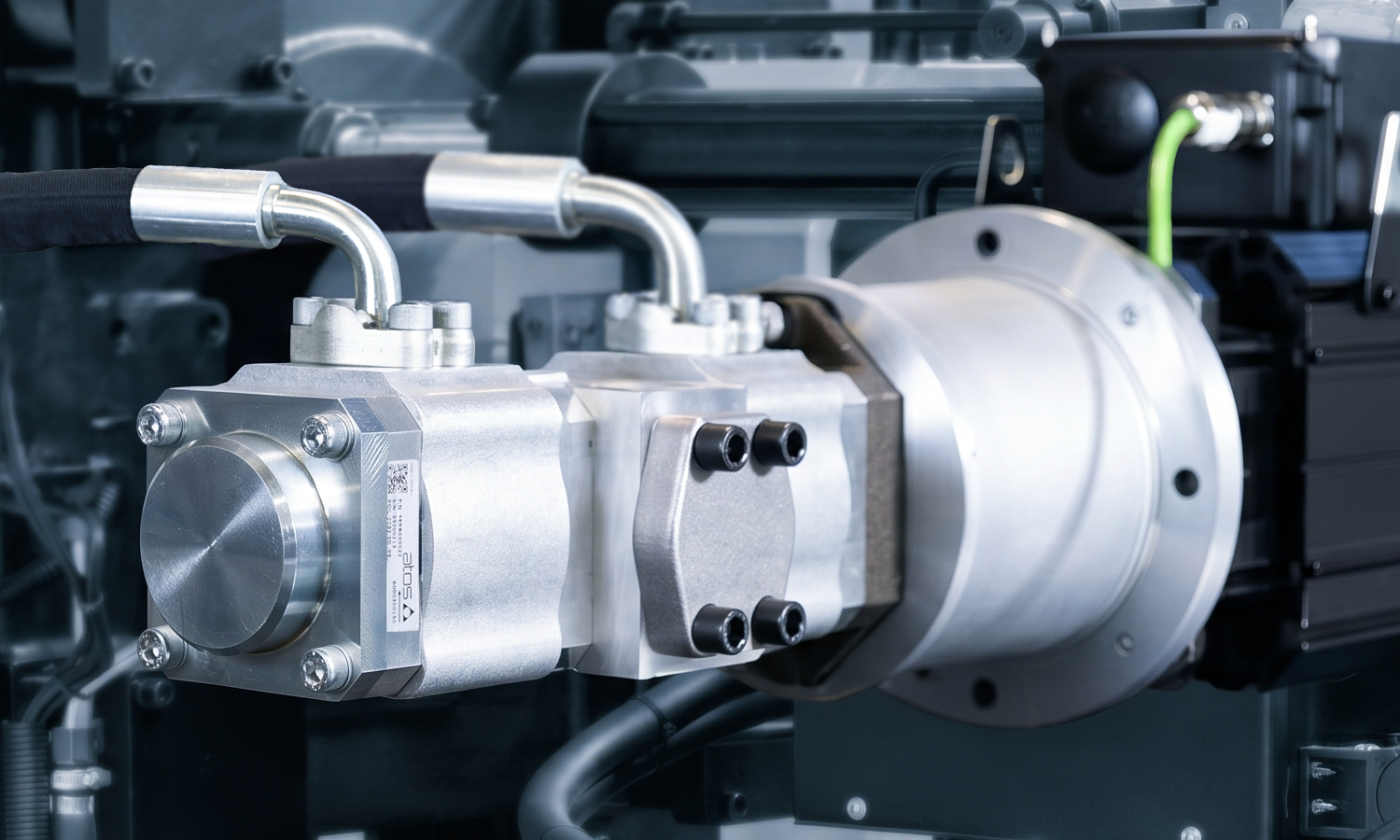
Advanced electrohydraulic systems, such as the servopumps developed by Atos, optimize energy consumption through more efficient pressure and flow control. These systems are able to align hydraulic output with specific application requirements while providing the diagnostic capabilities necessary for consistent, long-term performance.
Electrohydraulic architectures are also compatible with broader digitalization trends in manufacturing, including condition monitoring and predictive maintenance.
Energy Recovery Approaches
In certain types of machinery, hydraulic systems can be configured to recover and reuse energy generated during specific phases of operation, such as deceleration or load lowering. Technologies such as accumulators and regenerative circuits allow this energy to be stored and reintroduced into the system, contributing to overall energy management.
System Design and Integration
Energy efficiency in hydraulics is closely linked to system-level design. Engineers increasingly consider the interaction between components, control strategies, and operating cycles when developing hydraulic solutions.
Design approaches may include selecting components that match application requirements, optimizing system layouts to manage pressure and flow effectively, and integrating control systems that adapt to changing conditions. Digital modeling tools support these efforts by enabling simulation and analysis during the design phase.
This system-oriented perspective allows hydraulic solutions to be tailored to specific industrial processes, ensuring that energy use is aligned with operational objectives.
Fluids and Maintenance Considerations
Hydraulic fluid is a key element in system performance. Advances in fluid technology have led to products with stable viscosity characteristics and improved lubrication properties, supporting efficient energy transfer and component longevity.
Maintenance practices also play an important role in sustaining system efficiency. Regular monitoring of fluid condition, filtration, and inspection of components help maintain consistent operating conditions over time.
- Routine fluid analysis and filtration help preserve fluid properties and system stability.
- Monitoring operating conditions, including temperature and pressure, supports early identification of deviations.
These practices contribute to maintaining both performance and energy consistency throughout the system lifecycle.
Implementation Considerations
The adoption of energy-efficient hydraulic solutions depends on a range of factors, including application requirements, existing system configurations, and investment planning. In some cases, efficiency improvements can be achieved through incremental upgrades, while in others they may be incorporated into new system designs.
As technologies evolve, training and technical knowledge play an important role in implementation. Familiarity with modern control systems, digital tools, and advanced components enables organizations to make informed decisions and fully utilize available capabilities.
Outlook for Hydraulic Systems
Hydraulic technology continues to evolve in response to changing industrial demands. The integration of digital control, data analysis, and hybrid system architectures—enhanced by machine learning and AI—is driving a new generation of hydraulic solutions that combine high performance with smarter energy management.
Rather than being seen as separate from other actuation technologies, hydraulics are becoming a central component of diversified industrial system design. Their ability to deliver high force and precise control remains a key advantage, while ongoing innovation, including AI-driven predictive maintenance and optimization, positions hydraulics at the forefront of energy-efficient, intelligent industrial systems.
Energy efficiency in hydraulics is an area of active development within the manufacturing sector. Through advances in control technologies, system design, and component integration, hydraulic systems can support optimized energy use across a wide range of applications.
A balanced approach—considering performance, reliability, and efficiency—allows hydraulics to continue playing a central role in industrial processes. As the industry evolves, the focus remains on enhancing system capabilities while aligning with broader energy and sustainability goals.
Sponsored content by The Atos Group
Filed Under: Sponsored Content