
What happens when you get a couple of serial entrepreneurs together? They set out to disrupt and reshape the mobile machinery industry. That’s what co-founders Mike Terzo, Andrew Johnson, Ryan Twiss, Nick Darrah and Davide DeSilvio are doing with HeavyTech Inc. as they build completely reimagined construction machines from the ground up.
Built on a hybrid platform, HeavyTech’s prototype compact track loader will have three key features that its founders see as critical: right to repair and simple maintenance, high fuel efficiency, and operator comfort.
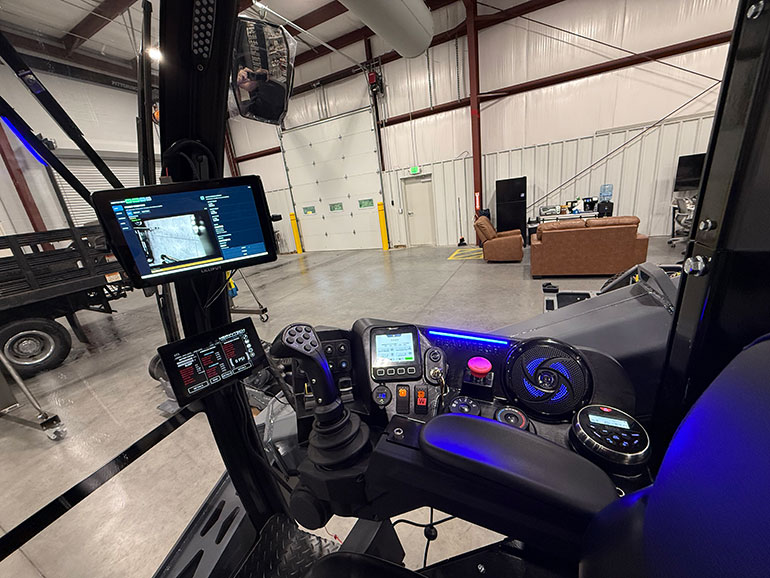
As they began to build the machine in Northeast Indiana, they wanted to start with a clean slate. “The big difference is we’re starting from scratch. The leaders of the industry are really not incentivized to throw out all their existing designs and try something brand new. We’ve thrown out all preconceptions,” Johnson said. “Everything that we’re putting together is out of our own designs, and it’s all designed around this electrification premise of diesel hybrid or hybridization.
“Starting from scratch is going to give us long-term, real advantages. We’ll be autonomy-ready. We’ve completely rethought the hydraulic system. We’re using power-on-demand electrohydraulic technology on the powertrain side that is going to give us a lot of advantages,” Johnson continued. “If we’re successful, we could sell a cutting-edge compact track loader or excavator for the same price as most industry leaders, like Kubota or Bobcat.”
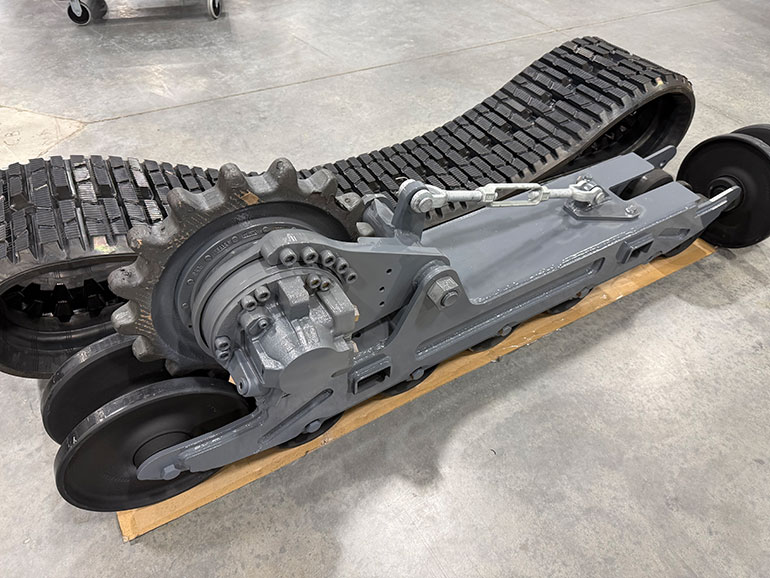
Terzo has been developing electrohydraulic power-on-demand technologies for years. At Terzo Power Systems, he developed the HydraPulse, an integrated electrohydraulic pump-motor unit. That earlier work provided valuable experience in electrifying hydraulic systems, but HeavyTech is not using the HydraPulse or Terzo Power Systems technology. HeavyTech’s architecture represents the next generation of Terzo’s work in electrohydraulics, developed independently as a complete, machine-level powertrain rather than as an individual electrohydraulic pump unit. HeavyTech’s power-on-demand electrohydraulic powertrain is designed to provide efficiency, precision and performance. Dedicated electric motors independently drive multiple work function pumps, which eliminates energy losses and complexity associated with traditional hydraulic systems that rely on directional and pressure control valves. This valveless digital control architecture enables real-time high-resolution control of every vehicle function with instantaneous power delivery, greatly improving productivity, responsiveness and operational versatility.
“The electrohydraulic architecture is a core part of what differentiates us. It’s a key breakthrough, particularly the valveless, digitally controlled system and independent electric pump drives,” Terzo said. “My earlier work at the component level helped shape how I think about electrohydraulic power-on-demand, but what we’re building at HeavyTech is a fully integrated, next-generation powertrain developed specifically for this platform.”
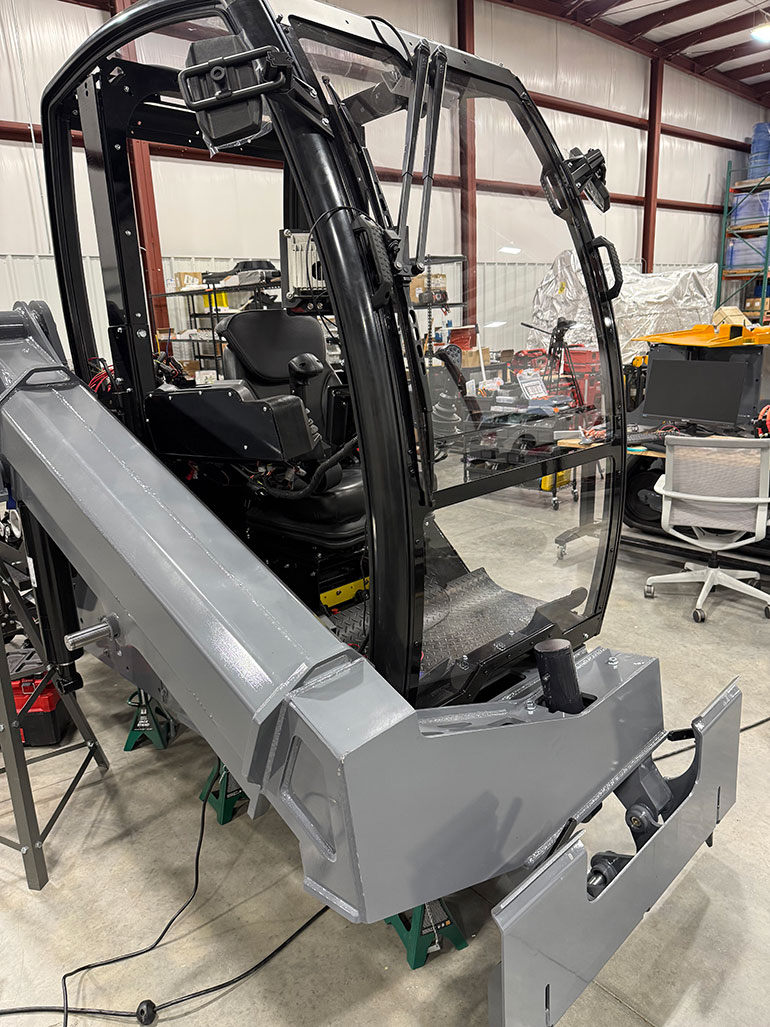
HeavyTech is currently completing the build and integration of its first prototype compact track loader, including the cab, electrical systems, wiring harnesses and other vehicle-level components. The team has been testing and validating individual systems and subsystems throughout development, with full-vehicle testing planned to begin in the coming months as the prototype moves into its next phase of development. He noted that they went with a diesel-electric hybrid design because it offers the best of both worlds. “We’ve all seen the total electric solutions kind of play out. Duty cycles are an issue. Where do you charge it? It’s all the same things the automotive market struggled with. There’s no infrastructure,” he said. “An automotive comparison would be like we’re kind of gunning towards the Toyota Prius. It’ll offer a good return on your investment, low maintenance, simple and easy to use, and intuitive.”
Terzo added, “This analogy works from a simplicity standpoint, but we’d frame it more around performance improvements, jobsite practicality and duty-cycle efficiency — delivering the benefits of hybridization/electrification without the limitations of charging infrastructure.”
Serviceability is key, Johnson said. Every component — whether mechanical, electrical or hydraulic — is laid out for easy access, simplifying maintenance and repair tasks in the field or in the shop. From removable panels and swing-out service doors to clearly labeled wiring and modular subsystems, the design is intended to reduce the frustration of cramped spaces and buried components.
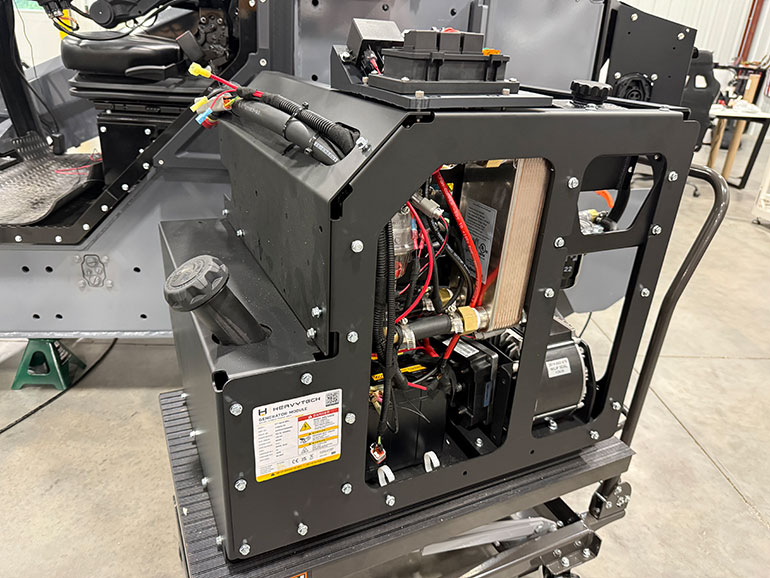
“We need to sell it at the same price as current machines. We can’t be three, four times the cost of a standard excavator. We must show a much-reduced total cost of ownership, especially with repair costs,” he said. “We’re doing this by having a modular design, with less parts and universal parts across all our machines.”
The vehicles are being designed with open diagnostics and detailed service documentation, allowing operators, fleet mechanics, and independent shops to maintain and repair equipment without needing proprietary tools or restrictive software. By eliminating unnecessary complexity and embracing transparency, they are reducing downtime, lowering ownership costs, and putting control back in the hands of the machine owners and operators.
“As for right to repair, our goal is to provide open diagnostics, serviceability and transparency for owners and operators, while still maintaining appropriate safeguards around safety-critical systems,” Terzo said. “It will not be fully ‘open-source’ across everything, but far more accessible than current industry norms.”
Johnson noted that this approach allows the machine to be diagnosed and repaired while maintaining safety. “There’s a tricky kind of balance, so there must be some interface for the farmer to be able to work on and diagnose it in the field. That’s a big goal for us. If we get that accomplished, then the machines will be practical, and that’s what we’re thinking about — safety, practicality, total cost of ownership, and performance. Then emissions and carbon footprint are icing on the cake.”
Terzo emphasized that HeavyTech is built to be as effective as other machines operating in the field, and the goal is to be better overall. “This is an active engineering program with defined architecture and near-term execution, not just a conceptual effort,” Terzo said. “We’re redefining what efficiency means in compact equipment. Our advanced hybrid and battery-electric powertrains are designed to deliver significant fuel savings and lower total cost of ownership— without sacrificing power or performance. Whether you’re on the job site or managing a fleet, our machines are built to keep operating costs low and productivity high.”
HeavyTech Inc.
heavytech.ai
Filed Under: EV Engineering, Featured, Industry News, Mobile Hydraulic Tips, Trending
