Fluid Power World

  • Home
  • Technologies
    • Hydraulics
      • Cylinders & Actuators
      • Filtration/Contamination Control
      • Fittings, Couplings & Adapters
      • Fluids
      • Fluid Conditioning
      • Hose & Tubing
      • Pumps & Motors
      • Related Technologies
      • Sealing
      • Sensors & Gauges
      • Valves & Manifolds
    • Pneumatics
      • Air Preparation & Regulation
      • Compressed Air Technologies
      • Cylinders & Actuators
      • End Effectors & Grippers
      • Fittings, Couplings & Adapters
      • Hose & Tubing
      • Sensors
      • Vacuum
      • Valves & Manifolds
  • Engineering Basics
  • Trending
  • Resources
    • Digital Issues
    • Pneumatics Tech Toolbox
    • Podcasts
    • Special Reports
    • Subscribe to Fluid Power World Print Magazine
    • Videos
    • Webinars / Digital Events
    • White Papers
  • Women in Engineering
    • Women in Fluid Power
    • Women in Engineering
  • Design Guides
  • Classrooms
    • Hydraulic Filtration
    • Hydraulic System Design
    • Pneumatics Classroom
  • Advertise
  • SUBSCRIBE

How do you achieve safety in pneumatics?

By Mary Gannon | May 29, 2026

Share

By Josh Cosford, Contributing Editor

Pneumatic systems are the backbone of modern industrial automation, providing reliable and efficient power for a wide range of applications, from packaging and assembly to heavy material handling. However, the very energy that makes these systems so effective also introduces significant workplace hazards if not managed correctly.

Understanding and implementing safety protocols is essential to protecting personnel while preventing costly equipment damage. Before discussing safety measures, it is critical to recognize the specific dangers associated with compressed air systems, such as stored energy risks. When you take a cubic yard of air and squish it down to just give cubic feet, you must understand how that stored energy wants nothing more than to return to its original volume, and will do so violently if given the chance.

Even when a system is shut down, air can remain trapped in cylinders, reservoirs, filter bowls, and plumbing. This residual pressure can cause sudden, unexpected movement of machine components, leading to severe crush or pinch hazards if not addressed through a thoughtful pneumatic safety program.

Another significant hazard is the potential for hose whip, such as if a pressurized line detaches or bursts, leading to uncontrolled whipping that can strike machine operators or maintenance mechanics, causing severe injury. Furthermore, escaping compressed air, particularly at high pressures, can potentially penetrate human skin, leading to life-threatening air embolisms in the bloodstream if it enters through a puncture wound.
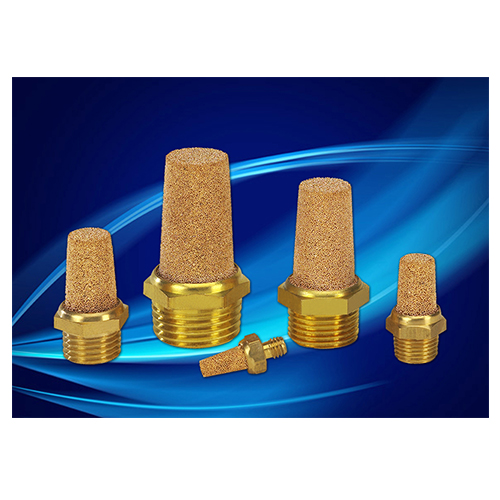
These miniature pneumatic mufflers use porous sintered bronze mesh to reduce air exhaust noise. Photo courtesy Clippard Instrument Laboratory.

Excessive noise is also a concern, as the exhaust of pneumatic systems without proper muffling can generate sound pressure levels exceeding that which can cause hearing damage over time. Recognizing these risks is the first step toward building a safer facility, as it allows maintenance and operations teams to anticipate potential failures and implement safe operational and maintenance procedures.

In fact, pneumatic maintenance activities are, ironically enough, one of the major windows for injury to occur. The most important step in pneumatic safety is isolating energy sources through strict lockout and tagout procedures. Before performing any maintenance, the air supply must be shut off, and the downstream residual air must be safely bled off or vented.

Pneumatic safety valves with lockout devices ensure that valves cannot be inadvertently opened while workers are servicing the equipment. Such lockable valves may simply shut off air supply, while others bleed any and all air to atmosphere as well. Each maintenance person working on a machine should have their own lock installed, and shouldn’t rely on the responsibility of others. It’s not uncommon to see a half-dozen padlocks installed by the various personnel working on the machine, preventing startups under false assumption of safety.
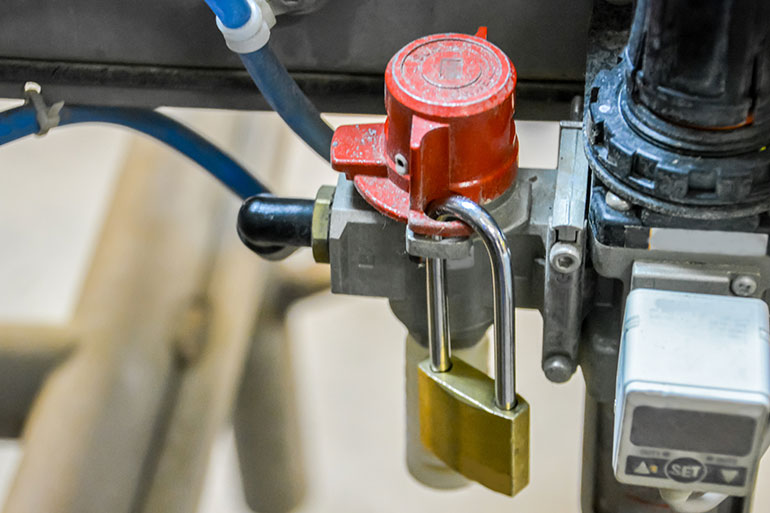
Pneumatic safety valves with lockout devices ensure that valves cannot be inadvertently opened while workers are servicing the equipment.

Installing soft-start and electric dump valves is another vital protective measure. These components allow for the gradual pressurization of the system upon startup, preventing violent and unpredictable cylinder strokes. In the event of an emergency stop, these valves quickly exhaust downstream pressure, bringing the system to a safe, zero-energy state.

Regular inspection and maintenance are also critical to safety because hoses, fittings, and valves wear are inevitable in industrial environments. Maintenance managers should establish a routine inspection schedule to check for leaks, cracks, and corrosion. Air treatment units, specifically filters, regulators, and lubricators, play a major role in safety as well. Contaminated or wet air can cause internal corrosion and sticky valves, which may lead to unpredictable operation, so maintaining clean, dry air ensures consistent, predictable operation.

Additionally, personnel working near pneumatic systems should always wear appropriate PPE, such as safety glasses with side shields to protect against flying debris or sudden air blasts, and hearing protection to prevent hearing damage from noisy pneumatic machinery. Employee safety training is the most important step to ensure they take pneumatic safety seriously, which is an aspect of culture that starts from the top down. When that culture of safety is part of the industrial workplace, everyone is responsible for safety in pneumatics.


Filed Under: Pneumatic Tips


About The Author

Mary Gannon

Mary Gannon is editor of Fluid Power World. She has been a technical writer and editor for more than 13 years, having covered fluid power, motion control and interconnect technologies.

Current Digital Issue

Fluid-Power-World-October-2026-issue-Cover-feature-image-template-copy

  A note from the editor In our October issue of Fluid Power World, my commentary takes a look at the growing role of automation and sensors in mobile machinery, where OEMs are increasingly focused on automating specific functions and improving machine performance rather than chasing fully autonomous equipment. Josh Cosford gets cheeky comparing the auto…

View Back Issues

Subscribe!

Fluid Power World is written by engineers for engineers engaged in designing machines and or equipment in Off-Highway, Oil & Gas, Mining, Packaging, Industrial Applications, Agriculture, Construction, Forestry, Medical and Material Handling. Fluid Power World covers pneumatics, mobile hydraulics and industrial hydraulics.

Fluid Power Design Guides

fluid
“fpw
EXPAND YOUR KNOWLEDGE AND STAY CONNECTED
Get the latest info on technologies, tools and strategies for Fluid Power Professionals.

RSS feed: Featured White Papers Featured White Papers

  • Moving fluid power forward
  • High-force linear motion: How to convert from hydraulic cylinders to electric actuators and why.
  • A technical comparison: Performance of pneumatic cylinders and electric rod actuators
Fluid Power World
  • Hose Assembly Tips
  • Mobile Hydraulic Tips
  • Pneumatic Tips
  • Sealing & Contamination Control Tips
  • About us
  • Contact Us

Copyright © 2026 Arrowfly LLC. All Rights Reserved. The material on this site may not be reproduced, distributed, transmitted, cached or otherwise used, except with the prior written permission of Arrowfly
Privacy Policy | Advertising | About Us

Search Fluid Power World

  • Home
  • Technologies
    • Hydraulics
      • Cylinders & Actuators
      • Filtration/Contamination Control
      • Fittings, Couplings & Adapters
      • Fluids
      • Fluid Conditioning
      • Hose & Tubing
      • Pumps & Motors
      • Related Technologies
      • Sealing
      • Sensors & Gauges
      • Valves & Manifolds
    • Pneumatics
      • Air Preparation & Regulation
      • Compressed Air Technologies
      • Cylinders & Actuators
      • End Effectors & Grippers
      • Fittings, Couplings & Adapters
      • Hose & Tubing
      • Sensors
      • Vacuum
      • Valves & Manifolds
  • Engineering Basics
  • Trending
  • Resources
    • Digital Issues
    • Pneumatics Tech Toolbox
    • Podcasts
    • Special Reports
    • Subscribe to Fluid Power World Print Magazine
    • Videos
    • Webinars / Digital Events
    • White Papers
  • Women in Engineering
    • Women in Fluid Power
    • Women in Engineering
  • Design Guides
  • Classrooms
    • Hydraulic Filtration
    • Hydraulic System Design
    • Pneumatics Classroom
  • Advertise
  • SUBSCRIBE