
By Micah Statler • Director of Industrial Technologies, Advanced Technology Services
As Industry 4.0 transforms manufacturing and heavy industries, the fusion of traditional hydraulics with advanced digital technologies is redefining what’s possible in industrial automation. Smart hydraulics — systems augmented with sensors, IoT connectivity, and predictive analytics — are emerging as vital components for modern, data-driven operations. These intelligent systems promise improved performance, minimized downtime, and significant gains in operational efficiency across diverse industrial applications.
Hydraulics have long been a cornerstone of heavy machinery and industrial equipment, providing unmatched power density and precision control in applications ranging from metal stamping to injection molding. But traditional hydraulic systems often face challenges like energy inefficiency, unplanned maintenance, and limited adaptability.
Industry 4.0, characterized by interconnected systems, real-time data sharing, and advanced automation, is transforming these limitations into opportunities. By embedding smart technologies into hydraulic systems, manufacturers can now achieve levels of responsiveness and efficiency that were previously unattainable.
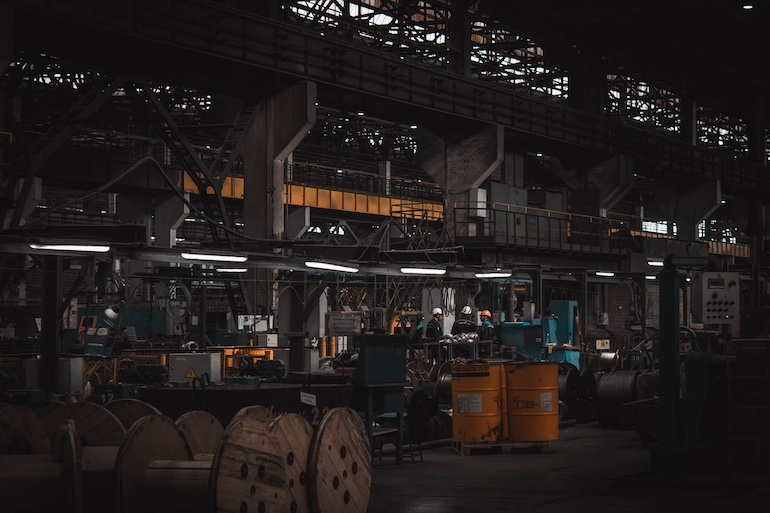
Intelligent hydraulics optimize metal forming in manufacturing.
At the heart of smart hydraulics lies the integration of sensors and IoT-enabled components. Pressure transducers, temperature sensors, flow meters, and position sensors continuously monitor system performance and send real-time data to centralized control systems.
This connectivity allows operators to:
- Track critical parameters like oil temperature, fluid levels, and pressure fluctuations.
- Detect anomalies early to avoid catastrophic failures.
- Adjust performance dynamically based on load conditions or production requirements.
For example, IoT-enabled hydraulic presses can automatically adapt to varying workloads, improving cycle times and reducing energy waste. In mobile applications, such as construction or mining equipment, intelligent hydraulics can optimize performance in changing environments, extending machine life and increasing productivity.
One of the most powerful advantages of smart hydraulics is predictive maintenance. Traditional maintenance schedules rely on fixed intervals or reactive servicing after failures occur, often leading to unnecessary downtime or costly repairs.
Predictive maintenance uses data analytics and machine learning algorithms to anticipate potential issues before they escalate. Key benefits include:
- Minimized downtime: Early detection of wear in hydraulic pumps, valves, or actuators allows for planned servicing during scheduled downtime.
- Extended equipment life: Monitoring oil contamination or temperature spikes prevents long-term damage to sensitive components.
- Cost savings: Companies avoid the high costs associated with emergency repairs and lost production time.
Traditional hydraulic systems are notorious for energy losses, especially in applications with highly variable load requirements. Intelligent systems address this through features like variable speed pump drives and load-sensing controls.
Smart hydraulics can automatically adjust flow and pressure based on real-time demand, ensuring energy is only used where and when it’s needed. This not only improves system efficiency but also supports sustainability goals by reducing overall power consumption and CO₂ emissions.
Additionally, advanced control algorithms allow for smoother, more precise motion control — critical for industries like robotics, aerospace, and automotive manufacturing where accuracy is paramount.

Advanced control algorithms allow for smoother, more precise motion control — critical for industries like robotics, aerospace, and automotive manufacturing where accuracy is paramount.
Smart hydraulic technologies are finding applications across a wide range of industries:
- Manufacturing: Intelligent hydraulic presses optimize force application for metal forming, reducing waste and improving quality control.
- Construction: Connected hydraulic systems in excavators and loaders enable real-time performance monitoring and remote diagnostics, keeping machines operational longer in demanding environments.
- Agriculture: Precision farming equipment benefits from intelligent hydraulics that deliver just the right amount of power for planting, harvesting, and soil preparation.
- Energy Sector: Offshore drilling platforms and wind turbines use smart hydraulics to monitor and maintain critical systems under harsh conditions.
- As the industrial landscape evolves, the shift to smart hydraulic systems isn’t just a trend — it’s a necessity. Manufacturers are under increasing pressure to improve uptime, reduce costs, and deliver sustainable solutions. Intelligent hydraulics address all three, offering a path to more resilient and adaptable operations.
Moreover, the ability to integrate these systems with existing digital infrastructures means companies can leverage the full potential of Industry 4.0 without overhauling their entire machinery fleets.
Smart hydraulics represent the next evolutionary step in industrial automation. By combining the raw power of traditional hydraulic systems with advanced sensors, IoT connectivity, and predictive analytics, industries can unlock new levels of efficiency, reliability, and performance.
In a world where downtime is costly and sustainability is critical, intelligent hydraulic systems aren’t just an upgrade — they’re a game changer. For companies ready to embrace Industry 4.0, investing in smart hydraulics is a strategic move toward a smarter, greener, and more productive future.
Advanced Technology Services
advancedtech.com
Filed Under: Components, Industry 40, IoT, Trending
