
By Josh Cosford, Contributing Editor
According to Globe Newswire, the global hydraulics market is going to expand from $39.4 billion to $44.3 billion over the next five years. We’re not talking about finance industry-level revenues here, but I can happily handle 2.4% compound annual growth rates in what is supposed to be our “mature industry.” It’s even more promising when I see that, through various sources, the North American market is projected to expand by 5-6% CAGR, which is expected to stem from the oil & gas, construction, and automation sectors.
If we bring pneumatics into the equation and consider the top five fluid power corporations alone (Parker Hannifin, Danfoss, Bosch Rexroth, SMC, and Festo), they collectively pool around $47 billion in 2024 (across all business segments, not just fluid power). These are impressive numbers, and their combined workforce of nearly 177,000 employees is a significant contributor to their local economies. When the zombie apocalypse eventually unfolds, it will be them and us who rebuild the world while social media influencers perish, so I’ve got no hate for any of the big guys.
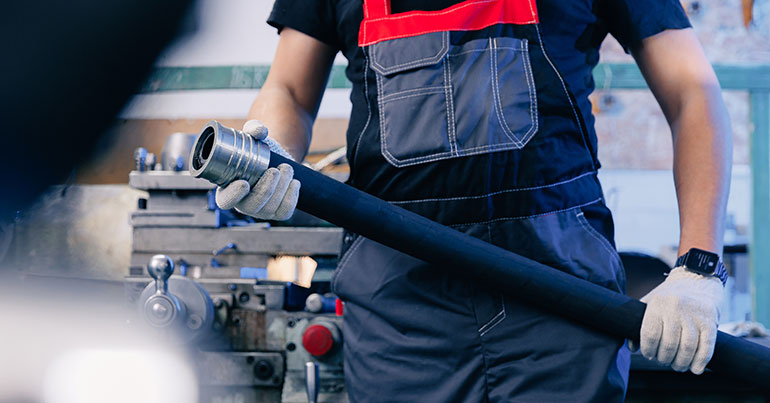
Still, I’m part of an SME (Small to Medium Enterprise) just like many of you reading this article. We don’t design or build landing gear or motion control systems, nor do we offer any products advertised with Industry 4.0 in the verbiage. I boldly estimate the Top 5 take home 50% of the fluid power market share, while another 25-30 percent stems from the medium enterprise and up camp, such as your Hydacs and Motion Industries of the world.
Does that leave the worldwide market for the little guy to just 20-25% of the $55 billion total fluid power market? Indeed, it does, but I’m less concerned about absolute numbers and the distribution of wealth than I am with real, hardworking people trying to make the best life for themselves and their families. So, rather than framing it as a David vs. Goliath scenario, like the tales of small-town shops closing their doors when a Walmart moves into town, we need to consider what value the smaller fluid power shops bring to their local customers.
Small shops can provide the dynamic and versatile service that the big guys cannot. Bosch Rexroth has no interest in setting up a small hose shop near the local steel mill, and Danfoss has bigger fish to fry than to repair used salter spreader trucks at the side of the road. And even if Parker did have market saturation in every geographic location, Amos is buying that power unit from Jeremiah in Lancaster County, PA, anyway.
The two-to-twelve-employee fluid power distributor remains common today because they offer fair prices with local representation and have the experience and expertise to support the community’s relevant industries. Whether offering support for the automotive parts plant or paper mill, the team at these shops will know the buyers, millwrights and maintenance managers by name.
The threat more likely to affect the local shop is the looming buyout by Motion Industries and Applied Industrial Technologies of the world. It’s not to say this is a bad thing, because in many cases, big brother allows the shop to keep its team in place while providing training resources and an expanded product offering. In many cases, the previous owner will stay on board to manage the branch, changing little as far as customers and team members are concerned.
Whereas the big manufacturers work on smart technologies, Industry 4.0 applications and corporate mergers to grow their business, the large players in distribution (such as SunSource and Grainger as well) acquire smaller chains or shops to expand their revenue potential and grow their physical market. And there’s nothing wrong with this approach because the aging fluid power experts who run these shops are just as likely to close when they retire if it wasn’t for a looming buyer. These big distributors have a more secure and steady stream of talent to help replace veterans or train newbies.
Calling the local Motion fluid power shop a “little guy” might be a stretch, but their function matches the definition, despite the consolidated HR channels and sophisticated ERP software. Tow truck drivers will still show up with a busted hose in hand to be remanufactured while he shops for new work gloves and ponder the three-dollar fundraiser candy bars.
A unique aspect of this industry is the respect that exists between major manufacturers and their distributors, regardless of their size. Sure, you may see the big five snipe the local OEM to attempt the direct sale now and again. But they’d much rather leverage hundreds of small shops than hire a salesforce to cold-call a small-town machine shop or AG repair garage. So long as manufacturing and industry at large will function in decentralized pockets, so too will the little guy.
Filed Under: Fluid Power World Magazine Articles, News, Trending
