
Having daily, weekly, and monthly checklists helps you keep on top of things like filter maintenance and more.
By Josh Cosford, Contributing Editor
Everyone thinks they know maintenance and believes they’re successfully running maintenance programs in their factory. This isn’t my first time around the rodeo, because despite my occasional and intentional confusion of metaphors, I know what hides within industrial fluid power systems, and it’s not pretty. I’ve been in hundreds of factories and observed machines ranging from Michelin Star kitchen level of clean to “how is this burger joint still in business?” level of nasty.
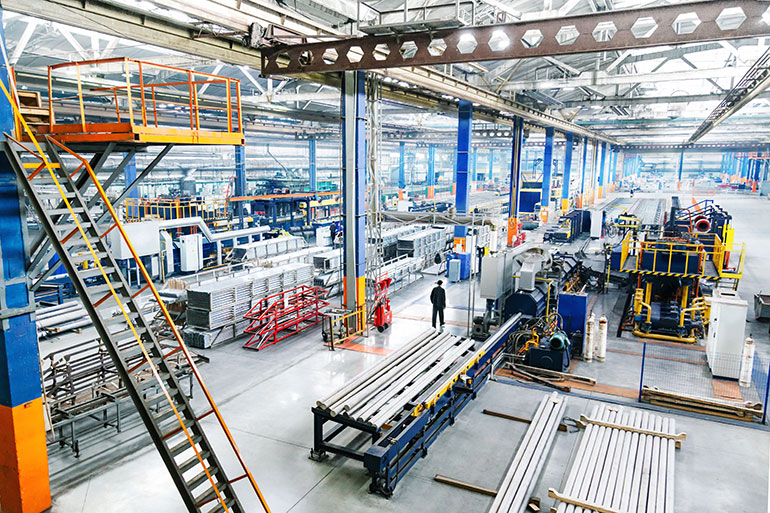
Because of the large scope of operations, industrial fluid power maintenance requires careful and regular inspections, most especially to prevent contamination.
Hydraulic and pneumatic systems are both unique energy transmission systems, each with its own maintenance concerns relative to electrical and mechanical systems, despite the high level of overlap. Fluid power uses compressed oil and air to transmit force from a (typically) central source to the actuators on or at the machine, where they can perform work to transform raw materials into semi-finished goods.
The importance of clean, dry air
Unlike in mechanical and electrical systems, fluid power components are sensitive to contamination. I’m not suggesting you should cut the bottom from an hourglass and drain its contents over a sprocket, but considering that oil and air circulate through the internals of every pump, compressor, valve, and actuator, the potential for damage and wear is significant. For this reason, filtration is the front line of protection for every fluid power system and is critical to every maintenance program.
Filters reside in many locations throughout fluid power systems, and you may see three to six or more on each machine, depending on the medium and complexity. An air compressor alone, for example, may use up to four filters to ensure clean, high-quality air is distributed downstream to the machine or tool locations.
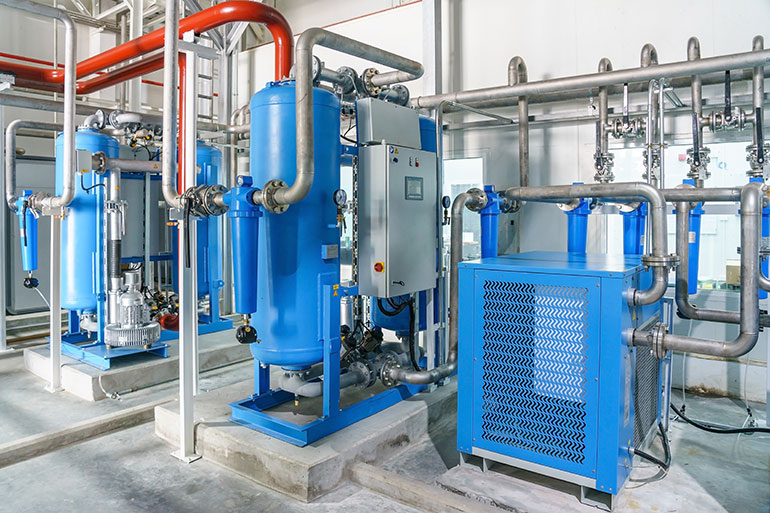
Keep an eye on your compressed air systems and dryer by adding them to your maintenance lists.
Industrial environments are rarely cleanroom quality, especially where metalwork is concerned. Industrial fallout, in the form of oil or coolant vapor, combines with various forms of particulate to create an environment more abrasive than a drunk step-uncle. Additionally, centralized HVAC systems are rare in manufacturing plants, so expect that dust will find its way into every nook and/or cranny of your air preparation system.
Because compressors may cost many tens of thousands of dollars, be sure to schedule the replacement of intake air filters at least annually in the best-case scenario, although semi-annual swaps are more appropriate in especially nefarious factories. These filters run the gamut in construction material from paper to foam and metal mesh to even synthetic HEPA media for cleanroom-quality areas.
The compressed air that the compressor has compressed then enters the main line filter, which is a large assembly appropriate for full flow and allows downstream nodes to receive clean air. High-quality versions offer bypass indicators to signal an element change, although inexpensive versions may require periodic replacement, piggybacked with other scheduled maintenance activities.
Depending on your plant layout and accoutrement, the presence of an air dryer should be noted and added to the maintenance list. They may sometimes equip pre- and post-filters, or even non-traditional equipment like coalescing filters. Regardless, a clean air dryer works better than a contaminated air dryer, so be sure to add its filter servicing to your schedule.
Additionally, compressors and refrigerant-style air dryers may have filters to protect the heat exchangers from clogging should grime build up on their cooling fins. Although a quick visual inspection easily identifies foam or paper elements requiring replacement, it’s a great idea to change or clean these frequently. Any buildup of industrial fallout can reduce airflow across the cooler, resulting in overheating of the compressor or dryer. Furthermore, desiccant air dryers may require the replacement of the desiccant material, which is best handled before you realize water is contaminating your machines and tools.
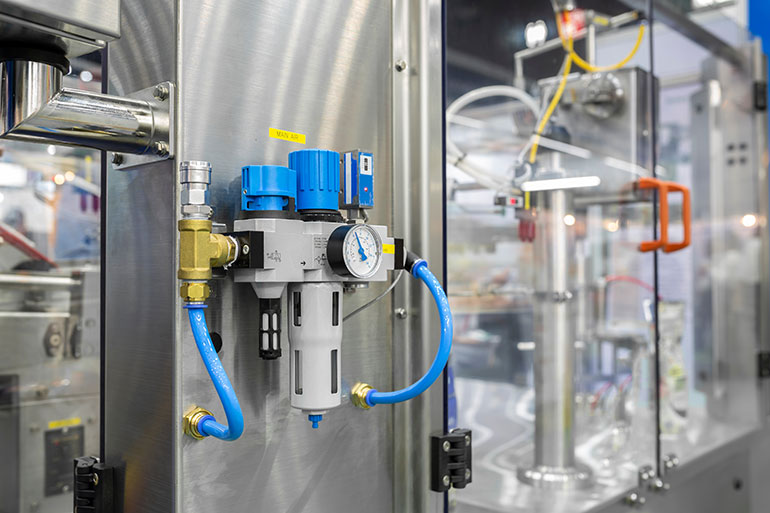
FRLS should be checked regularly. the bowl filter should be cleaned, filter elements replaced when clogged, and lubricator oil levels should be checked.
FRLs are common throughout pneumatic distribution systems, and they’re usually recommended at each workstation leg of the circuit. The Filter Regulator Lubricator ensures each station has the appropriate work pressure while filtering out both water and particles before it adds drops of lubricant to satisfy the needs of tools, valves and actuators. Their filters use a cyclonic separation method in addition to metal mesh or sintered bronze elements. Although these elements can be replaced, they can also be cleaned, in many cases.
The keys to keeping hydraulic oil clean
Comparatively, hydraulic filtration systems are maintained less like the method lube shops use to convince you to purchase the replacement cabin filter, “What’s that? If I don’t replace the slightly dusty filter with the little boxwood leaf stuck in the pleat, I’ll be inhaling cyanide gas before I get to the Dunkin’s down the street?” No joke, one factory service center I booked my car into had an animation on their waiting area TV showing dirty air blowing through a clogged filter like a cartoon sloth’s bad breath animation. In reality, a clogged filter traps more subsequent particles, not fewer. But I digress.
Hydraulic filters have (or should have) gauges to signal maintenance staff when a filter is close to becoming clogged. These bypass indicators can be pressure gauges, transducers, pop-up indicators or warning lights. Depending on the manufacturer, they may signal their warning when the filter is around two-thirds clogged, providing plenty of time before the bypass check valve opens, which essentially dumps fluid straight through the element.
Filters are most commonly installed in and around the hydraulic power unit, and will be located in the tank top, inline to the return port, the primary pressure line or occasionally within special components, such as a servo/proportional valve stack or hydraulic manifold. The best filters are synthetic media with high beta ratios (efficiency) and low micron ratings. If you can upgrade your paper or cellulose elements to synthetic, do so, but just check to ensure you’re not creating excessive, flow-related back pressure due to the increased flow restriction of finer media.
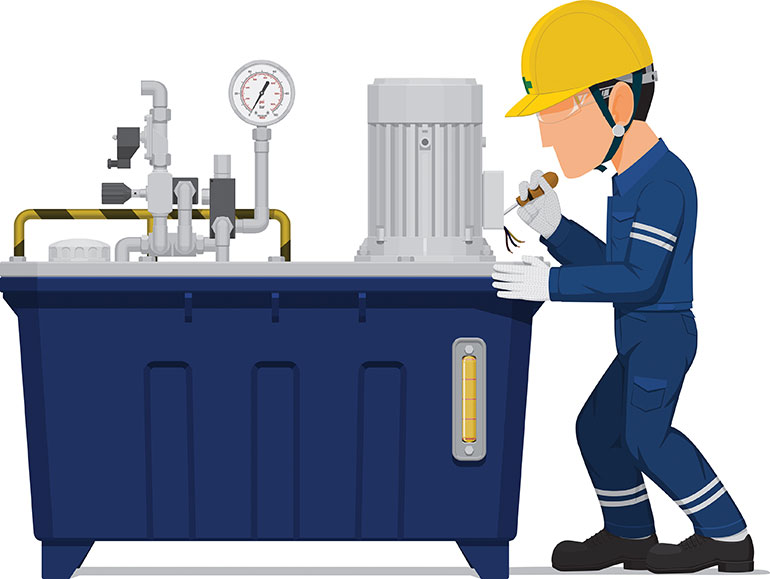
Keep an eye on hydraulic power units and ensure they are in working order with proper filtration.
No matter the filter type or location, it’s best to stock a year’s worth of spare elements. Besides being handy for your scheduled PMs, having them on hand for emergencies could be a lifesaver when a hydraulic pump implodes or you experience an unexpected influx of contamination. And don’t play guesswork; keep all the appropriate part numbers for replacements with the machine and service manuals. Filters and elements from older machines may have seen their filters replaced with crossover brands, so don’t leave these details buried in Doug’s skull, because he’s retiring in six months anyway.
Make a plan
Most of the fluid power maintenance missives I write regarding maintenance are related to filtration because it’s the most critical component. Preventing the failure of your equipment trumps all other tactics, including predictive maintenance. Nevertheless, I rarely discuss the administrative tactics plants use to plan, schedule, and execute a successful fluid power maintenance program.
Any good maintenance plan begins with a schedule, as there are tasks to be completed daily, weekly, monthly, and longer. No task is too small, because even something as small as an oil leak could lead to thousands of dollars in damage if a power unit or air compressor runs dry. Here is a simplified breakdown of the daily, weekly and monthly tasks your maintenance team should perform on your fluid power machinery:
Daily
-
Check fluid levels in the hydraulic reservoirs and compressor case
-
Inspect power units, compressors and lines for oil or coolant leaks
-
Listen for unusual noises or air leaks
-
Observe any and all pressure gauges on regulators, power units and filter elements
-
Drain the water from all air filter bowls with manual drains
Weekly
-
Inspect the breather caps and filter baskets on power units
-
Check all hydraulic hoses and air lines for bulges and kinks
-
Verify that the pressure settings of all pressure valves is correct and adjust as necessary
-
Inspect the air compressor intake filters
-
Inspect the auto-drain style separators
Monthly
-
Sample and test the hydraulic oil of one of the power units (on a six-month rotation)
-
Perform cycle counts on spare components in stock
-
Inspect accumulators and confirm precharge pressure
-
Perform a heat map on fluid power machinery
-
Inspect and test pneumatic safety valves and lockout valves
-
Perform leak detection audits using leak detection kits
The above schedule is a rough guide, and your actual requirements will depend upon the type and quantity of machinery in your plant. Also, reference and adhere to OEM maintenance guidelines and adjust schedules based on their requirements. Also, consider that harsh operating environments could accelerate the tasks in the above schedule.
From a maintenance management perspective, some fundamental strategies are helpful to ensure your plant runs smoothly. Although it’s not talked about, the principles of maintenance are just as important here as they are for excavators or highway line painting machines.
Although it starts with a great team, every good team is beaten by a poor system. Being clear with the millwrights and mechanics that their maintenance schedule is non-negotiable eliminates any opportunity for surprises or pushback; “Oh, you mean I had to do my weekly checks this week?” Without discipline in the maintenance schedule, you’re just putting out fires while preventing nothing.
Sometimes unplanned maintenance results in backlogs, which then turn into bottlenecks. Ensure bureaucracy doesn’t hinder repairs and unplanned maintenance. Awaiting on your plant manager to approve a replacement pump on a process-critical line contradicts lean manufacturing principles, especially when a pump replacement is the only possible solution. Reduce any such potential bottlenecks by giving the appropriate personnel authority to make decisions, thereby minimizing decision-making handoffs.
Finally, find the time to upskill your maintenance team. I understand you can’t just have your junior mechanics rewiring your control panel, but every plant needs more than one “fluid power guy.” With more people trained on more machines, you don’t have to work around the silos of technical ability and experience. Everyone should be able to replace a hydraulic cylinder or ISO subplate pneumatic valve, so when one mechanic is busy, there is no gatekeeping or backlog.
Finally, this article primarily discussed old-school methods and considerations for industrial fluid power maintenance, while entirely ignoring Industry 4.0 predictive maintenance advancements. Even if you’ve implemented smart factory technology into your plant, your awareness of exactly what these technologies are trying to achieve with collecting, analyzing and broadcasting data is clear when you consider the advice of this article.
Filed Under: Air Compressors, Air Preparation & Regulation, Components, Compressed Air Technologies, Engineering Basics, Fluid Conditioning, Fluids
