Fluid Power World

  • Home
  • Technologies
    • Hydraulics
      • Cylinders & Actuators
      • Filtration/Contamination Control
      • Fittings, Couplings & Adapters
      • Fluids
      • Fluid Conditioning
      • Hose & Tubing
      • Pumps & Motors
      • Related Technologies
      • Sealing
      • Sensors & Gauges
      • Valves & Manifolds
    • Pneumatics
      • Air Preparation & Regulation
      • Compressed Air Technologies
      • Cylinders & Actuators
      • End Effectors & Grippers
      • Fittings, Couplings & Adapters
      • Hose & Tubing
      • Sensors
      • Vacuum
      • Valves & Manifolds
  • Engineering Basics
  • Trending
  • Resources
    • Digital Issues
    • Pneumatics Tech Toolbox
    • Podcasts
    • Special Reports
    • Subscribe to Fluid Power World Print Magazine
    • Videos
    • Webinars / Digital Events
    • White Papers
  • Women in Engineering
    • Women in Fluid Power
    • Women in Engineering
  • Design Guides
  • Classrooms
    • Hydraulic Filtration
    • Hydraulic System Design
    • Pneumatics Classroom
  • Advertise
  • SUBSCRIBE

Safety is core to proper vacuum design in automation

By Mary Gannon | June 19, 2026

Share

Contributed by Michael Tuohey  • Regional Marketing Manager, North America, Piab

In modern manufacturing, safety is a core design requirement. As more processes become automated and rely on vacuum, the way vacuum systems are engineered has a direct impact on the safety of people, products, and assets. Piab’s approach places safety at the center, combining smart design, robust hardware, and intelligent control to minimize risk.

Engineering safety into everything: Safety starts with how each vacuum component is built. Vacuum pumps, suction cups, and grippers should be designed to maintain performance even in challenging environments, which reduces accidents caused by suction loss, unexpected drops, or equipment failures.

Redundant sealing surfaces, wear-resistant materials, and geometries ensure that suction cups retain their grip across many surfaces, from smooth glass to porous packaging. When a vacuum system holds reliably, operators are less exposed to falling loads, erratic robot movements, and unplanned intervention.
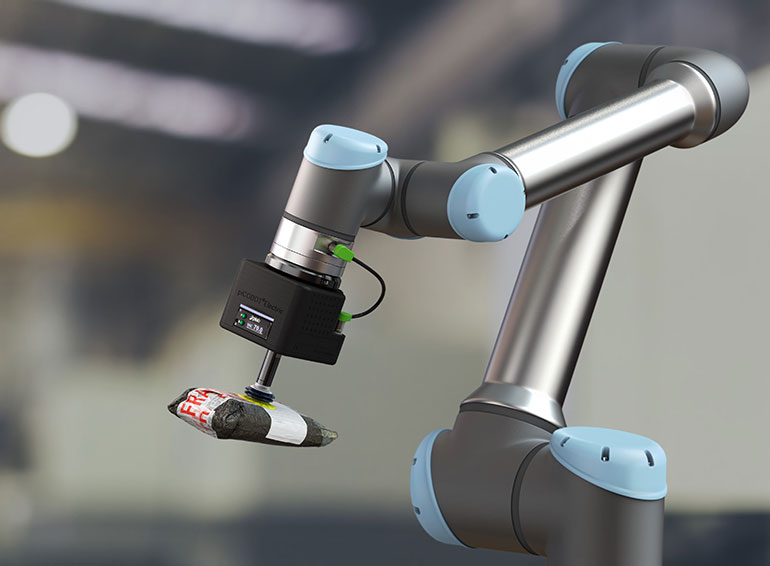
piCOBOT Electric is a fully electric vacuum pump unit that maximizes the lifting qualities of cobots without the use of compressed air. They are best used when handling sealed and slightly porous materials and any other application demanding the absence of compressed air.

Protecting people around robots and cobots: As robots and cobots become common, the interface between human and machine must be especially safe. Vacuum gripping solutions on robotic arms for picking, placing, and palletizing ensure precise control and predictable behavior.

Controlled release of vacuum helps ensure that parts are not dropped or flung when the robot changes speed or direction. Vacuum levels can be tuned to match the weight and fragility of the product, reducing the chance of breakage or flying debris. When used with collaborative robots, soft and compliant suction cups add a layer of passive safety: they are more forgiving than rigid mechanical grippers if contact with a human occurs.

Built-in safety and monitoring: Modern vacuum systems increasingly rely on smart monitoring and control to maintain safe operation. By measuring vacuum levels, flow, and response times, advanced technology can detect developing problems early, such as a blocked filter, leaking line, or damaged cup.

When thresholds are breached, for example, Piab’s Smart system can trigger alarms, slow down the process, or stop it altogether, preventing small issues from escalating into dangerous situations. Integrated non-return valves and vacuum reservoirs maintain grip briefly even if air supply fails, giving controllers time to react and bring the system to a safe state.

In more advanced setups, predictive diagnostics can schedule maintenance before performance drops below safe levels. This reduces both unplanned downtime and the temptation to “keep running just a bit longer” with equipment that is no longer operating safely.
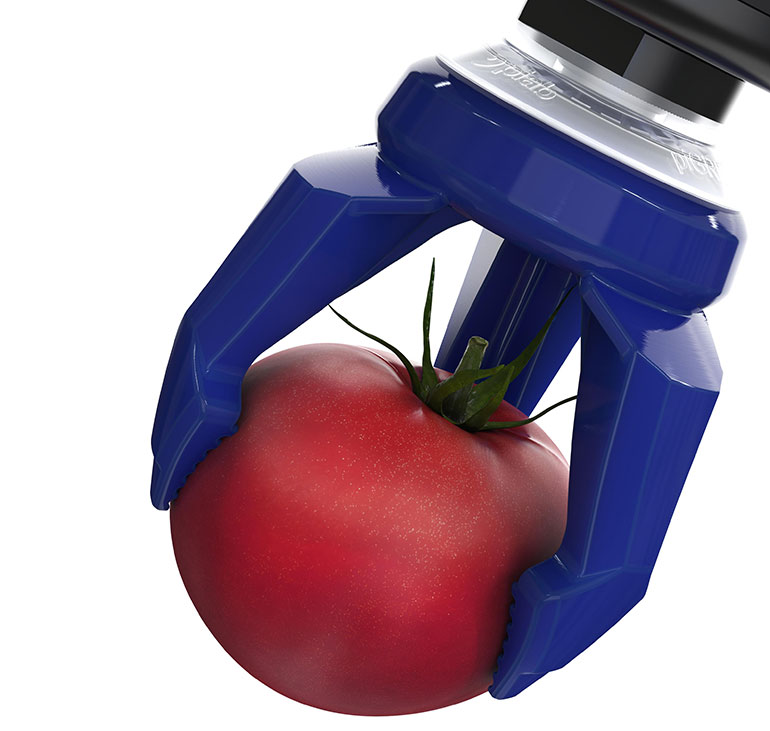
Vacuum solutions, like Piab’s PiSoftGrip, support hygienic and contamination aware design using appropriate materials, smooth surfaces, and components that are easy to clean and inspect. Soft materials also handle delicate foods and packages, preventing crushing and other damage.

Product and contamination safety: Safety is not only about people; it is also about protecting the product and the process. In industries such as food, pharmaceuticals, and electronics, contamination or product damage can represent a significant safety and quality risk. Piab’s vacuum solutions support hygienic and contamination-aware design using appropriate materials, smooth surfaces, and components that are easy to clean and inspect.

Carefully controlled gripping forces help avoid crushing or deforming packages, which could otherwise lead to leaks, spills, or exposure to sensitive contents. For clean environments, low-dust and low-particle designs, and oil-free vacuum generation minimizes airborne contamination.

Compliance and risk reduction across the line: Every production line faces a unique combination of safety regulations, standards, and internal policies. By working with modular, well-engineered vacuum components, machine builders and end users can more easily design systems that comply with relevant safety standards. Documented performance data, standardized interfaces, and clear guidance on installation and maintenance make it easier to perform risk assessments and implement appropriate safeguards.

Vacuum technology also plays a role in minimizing energy consumption and noise, both of which impact long-term operator health. Efficient vacuum pumps, optimized flow control, and smart energy-saving functions reduce the load on compressed air networks and help maintain a safer, more comfortable working environment.

A safety-first philosophy: Safety with vacuum technology is as much about philosophy as it is about hardware. By treating safety as a design input from the beginning — rather than a box to check at the end — vacuum systems become inherently safer, more predictable, and easier to maintain.

Piab
piab.com


Filed Under: Components, Engineering Basics, Featured, Grippers, Pneumatic Tips, Vacuums
Tagged With: piab
 

About The Author

Mary Gannon

Mary Gannon is editor of Fluid Power World. She has been a technical writer and editor for more than 13 years, having covered fluid power, motion control and interconnect technologies.

Current Digital Issue

Fluid-Power-World-October-2026-issue-Cover-feature-image-template-copy

  A note from the editor In our October issue of Fluid Power World, my commentary takes a look at the growing role of automation and sensors in mobile machinery, where OEMs are increasingly focused on automating specific functions and improving machine performance rather than chasing fully autonomous equipment. Josh Cosford gets cheeky comparing the auto…

View Back Issues

Subscribe!

Fluid Power World is written by engineers for engineers engaged in designing machines and or equipment in Off-Highway, Oil & Gas, Mining, Packaging, Industrial Applications, Agriculture, Construction, Forestry, Medical and Material Handling. Fluid Power World covers pneumatics, mobile hydraulics and industrial hydraulics.

Fluid Power Design Guides

fluid
“fpw
EXPAND YOUR KNOWLEDGE AND STAY CONNECTED
Get the latest info on technologies, tools and strategies for Fluid Power Professionals.

RSS feed: Featured White Papers Featured White Papers

  • Moving fluid power forward
  • High-force linear motion: How to convert from hydraulic cylinders to electric actuators and why.
  • A technical comparison: Performance of pneumatic cylinders and electric rod actuators
Fluid Power World
  • Hose Assembly Tips
  • Mobile Hydraulic Tips
  • Pneumatic Tips
  • Sealing & Contamination Control Tips
  • About us
  • Contact Us

Copyright © 2026 Arrowfly LLC. All Rights Reserved. The material on this site may not be reproduced, distributed, transmitted, cached or otherwise used, except with the prior written permission of Arrowfly
Privacy Policy | Advertising | About Us

Search Fluid Power World

  • Home
  • Technologies
    • Hydraulics
      • Cylinders & Actuators
      • Filtration/Contamination Control
      • Fittings, Couplings & Adapters
      • Fluids
      • Fluid Conditioning
      • Hose & Tubing
      • Pumps & Motors
      • Related Technologies
      • Sealing
      • Sensors & Gauges
      • Valves & Manifolds
    • Pneumatics
      • Air Preparation & Regulation
      • Compressed Air Technologies
      • Cylinders & Actuators
      • End Effectors & Grippers
      • Fittings, Couplings & Adapters
      • Hose & Tubing
      • Sensors
      • Vacuum
      • Valves & Manifolds
  • Engineering Basics
  • Trending
  • Resources
    • Digital Issues
    • Pneumatics Tech Toolbox
    • Podcasts
    • Special Reports
    • Subscribe to Fluid Power World Print Magazine
    • Videos
    • Webinars / Digital Events
    • White Papers
  • Women in Engineering
    • Women in Fluid Power
    • Women in Engineering
  • Design Guides
  • Classrooms
    • Hydraulic Filtration
    • Hydraulic System Design
    • Pneumatics Classroom
  • Advertise
  • SUBSCRIBE