Fluid Power World

  • Home
  • Technologies
    • Hydraulics
      • Cylinders & Actuators
      • Filtration/Contamination Control
      • Fittings, Couplings & Adapters
      • Fluids
      • Fluid Conditioning
      • Hose & Tubing
      • Pumps & Motors
      • Related Technologies
      • Sealing
      • Sensors & Gauges
      • Valves & Manifolds
    • Pneumatics
      • Air Preparation & Regulation
      • Compressed Air Technologies
      • Cylinders & Actuators
      • End Effectors & Grippers
      • Fittings, Couplings & Adapters
      • Hose & Tubing
      • Sensors
      • Vacuum
      • Valves & Manifolds
  • Engineering Basics
  • Trending
  • Resources
    • Digital Issues
    • Pneumatics Tech Toolbox
    • Podcasts
    • Special Reports
    • Subscribe to Fluid Power World Print Magazine
    • Videos
    • Webinars / Digital Events
    • White Papers
  • Women in Engineering
    • Women in Fluid Power
    • Women in Engineering
  • Design Guides
  • Classrooms
    • Hydraulic Filtration
    • Hydraulic System Design
    • Pneumatics Classroom
  • Advertisers
    • Advertise
    • PR Submissions
    • Eblast Submissions
  • SUBSCRIBE

The “dirty thirty” — Why the last few feet of piping matter

By Paul Heney | October 9, 2025

Share

When people talk about improving compressed air systems, the focus is usually on compressors, dryers, filters, and main piping. But there’s a part of the system that often gets overlooked — the last 30 feet of piping that connects your machine to the main header. In the industry, some folks call this stretch the “dirty thirty,” and for good reason.

Think about it: this last bit of piping is usually put together in a hurry to get a machine running. Whatever is handy — hoses, clamps, quick couplers, regulators — gets thrown into the mix. The trouble is these quick fixes rarely match the actual airflow needs of the equipment. The result? Starved machines, pressure drops, and frustrated operators.

It’s not uncommon to see 30, 40, or even 50 psi of pressure lost in this short section of piping — often 10 times more than the pressure drop across hundreds of feet of main distribution pipe.

The knee-jerk reaction is usually to crank up system pressure, but that only makes things worse. Higher pressure increases leaks, drives up energy use, and creates what’s known as artificial demand. In simple terms, you end up paying more for the same amount of production.
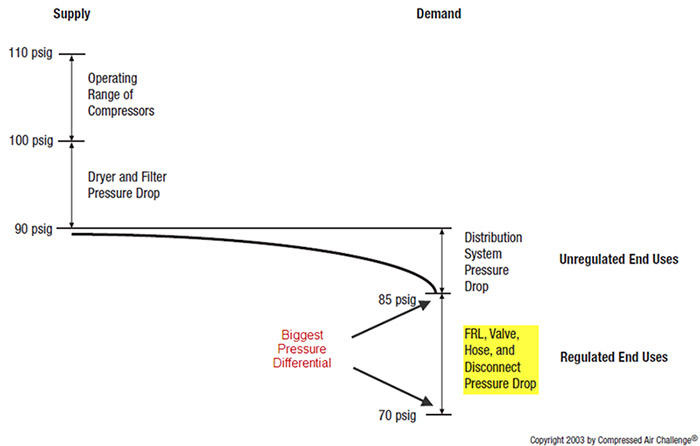
Fig. 1. The biggest pressure drop is usually at the end of the line. Something like this is very economical to address.

A simple way to check if the dirty thirty is causing problems is to put a gauge right at the tool or machine connection. If the pressure dips significantly when the tool is in use, chances are the upstream hoses, fittings, or filters are undersized. Mechanical gauges may not catch the full swing, so a digital gauge that records minimum and maximum pressure can give a clearer picture.

Here’s a real-world example: a printing plant installed a new collating machine during a rushed weekend shutdown. To save time, they hooked it up with a 15-ft length of quarter-inch hose. Immediately, the machine started having pressure problems, and the plant had to raise system pressure to the max just to limp along. When an auditor checked, they found that the tiny hose was dropping more than 20 psi at peak demand.

Switching to a larger 3/8-in. hose would have reduced that loss by nearly 90%.

The lesson is simple — don’t underestimate the impact of the last few feet. Oversized hoses, proper regulators, and well-matched fittings can make all the difference.

Before turning up compressor pressure or adding another machine, take a closer look at your dirty thirty. You might find the cheapest energy savings hiding right at the end of the line.


Filed Under: Air Compressors, Air Preparation, Components, Compressed Air Technologies, Engineering Basics, Hose & Tubing, Pneumatic Tips


About The Author

Paul Heney

Current Digital Issue

Fluid-Power-World-November-2026-issue-Cover-feature-image-template-copy

A note from the editor This issue takes a look at some of the practical challenges engineers face when designing, maintaining and troubleshooting fluid power systems. Our Design Notes feature explores the particularly harsh environment of tunnel boring machines, where moisture and contamination can quickly become reliability problems. Eaton’s filtration expert weighs in here on…

View Back Issues

Subscribe!

Fluid Power World is written by engineers for engineers engaged in designing machines and or equipment in Off-Highway, Oil & Gas, Mining, Packaging, Industrial Applications, Agriculture, Construction, Forestry, Medical and Material Handling. Fluid Power World covers pneumatics, mobile hydraulics and industrial hydraulics.

Fluid Power Design Guides

fluid
“fpw
EXPAND YOUR KNOWLEDGE AND STAY CONNECTED
Get the latest info on technologies, tools and strategies for Fluid Power Professionals.

RSS feed: Featured White Papers Featured White Papers

  • Moving fluid power forward
  • High-force linear motion: How to convert from hydraulic cylinders to electric actuators and why.
  • A technical comparison: Performance of pneumatic cylinders and electric rod actuators
Fluid Power World
  • Hose Assembly Tips
  • Mobile Hydraulic Tips
  • Pneumatic Tips
  • Sealing & Contamination Control Tips
  • About us
  • Contact Us

Copyright © 2026 Arrowfly LLC. All Rights Reserved. The material on this site may not be reproduced, distributed, transmitted, cached or otherwise used, except with the prior written permission of Arrowfly
Privacy Policy | Advertising | About Us

Search Fluid Power World

  • Home
  • Technologies
    • Hydraulics
      • Cylinders & Actuators
      • Filtration/Contamination Control
      • Fittings, Couplings & Adapters
      • Fluids
      • Fluid Conditioning
      • Hose & Tubing
      • Pumps & Motors
      • Related Technologies
      • Sealing
      • Sensors & Gauges
      • Valves & Manifolds
    • Pneumatics
      • Air Preparation & Regulation
      • Compressed Air Technologies
      • Cylinders & Actuators
      • End Effectors & Grippers
      • Fittings, Couplings & Adapters
      • Hose & Tubing
      • Sensors
      • Vacuum
      • Valves & Manifolds
  • Engineering Basics
  • Trending
  • Resources
    • Digital Issues
    • Pneumatics Tech Toolbox
    • Podcasts
    • Special Reports
    • Subscribe to Fluid Power World Print Magazine
    • Videos
    • Webinars / Digital Events
    • White Papers
  • Women in Engineering
    • Women in Fluid Power
    • Women in Engineering
  • Design Guides
  • Classrooms
    • Hydraulic Filtration
    • Hydraulic System Design
    • Pneumatics Classroom
  • Advertisers
    • Advertise
    • PR Submissions
    • Eblast Submissions
  • SUBSCRIBE