
Preventing downtime before it starts is crucial to safe, cost-effective and reliable hose assemblies.
By Trey Travis, Vice President of Operations, Southeastern Hose
In manufacturing environments, reliability is everything. Production schedules and worker safety all depend on systems operating as intended. While pumps and control systems often receive significant attention during maintenance planning, industrial hose assemblies are frequently overlooked until a problem occurs.
Unfortunately, hose failures rarely happen without warning. Small signs of wear can develop into leaks, pressure loss, contamination issues, equipment damage, or complete system shutdowns. The financial stakes are significant. According to Siemens’ 2024 “True Cost of Downtime” report, the world’s largest manufacturers lose approximately $1.4 trillion annually to unplanned downtime, representing roughly 11% of annual revenue. The report found that the cost of downtime has increased substantially in recent years as manufacturing operations become more interconnected and production schedules more demanding.
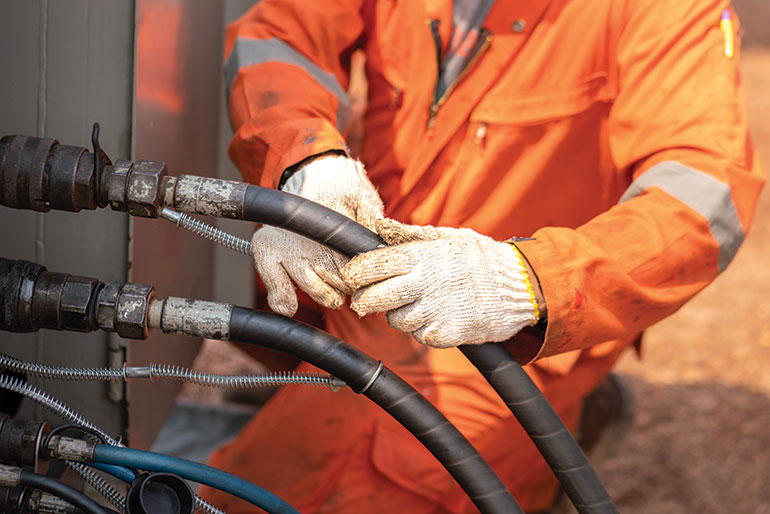
Industrial hoses play a critical role in transferring liquids, gases, chemicals, steam, hydraulic fluids, and other materials throughout manufacturing facilities. They are designed to withstand demanding conditions, but like any component operating under pressure, they experience wear over time. Exposure to vibration, temperature fluctuations, abrasive environments, pressure surges and harsh chemicals can gradually degrade hose assemblies and increase the likelihood of failure.
Understanding the true costof hose failure
When a hose fails unexpectedly, the consequences often extend far beyond the cost of replacing the component itself. Production lines need to be shut down while maintenance personnel diagnose the issue and complete repairs in most cases. Unplanned downtime remains a persistent challenge across manufacturing. Siemens research found that major manufacturers experience an average of 20 unplanned downtime incidents per facility each month, highlighting how even seemingly minor component failures can contribute to recurring operational disruptions.
In industries such as chemical processing, power generation, semiconductor manufacturing, steelmaking, and pulp and paper production, even a brief interruption can result in substantial financial losses. Depending on the application, a hose failure may also create safety concerns by releasing pressurized fluids or hazardous materials into the work environment. There is also the potential for environmental impacts when fluids are released unexpectedly. This can lead to fines from regulatory organizations compounding the overall cost of the failure.
For many facilities, the greatest cost is not the replacement hose itself but the unplanned downtime that follows. Industry research shows that downtime costs can range from approximately $25,000 per hour for mid-sized manufacturers to more than $500,000 per hour for large industrial operations. In highly automated sectors such as automotive manufacturing, downtime costs can exceed $2 million per hour, demonstrating how even a relatively inexpensive component failure can trigger substantial operational losses.
Common warning signs of hose deterioration
One of the most common misconceptions surrounding hose assemblies is that failures occur suddenly and without warning. In reality, most failures develop gradually and present visible indicators long before a catastrophic event occurs. The challenge is that these warning signs are often missed because hoses receive less attention during routine inspections than larger pieces of equipment.
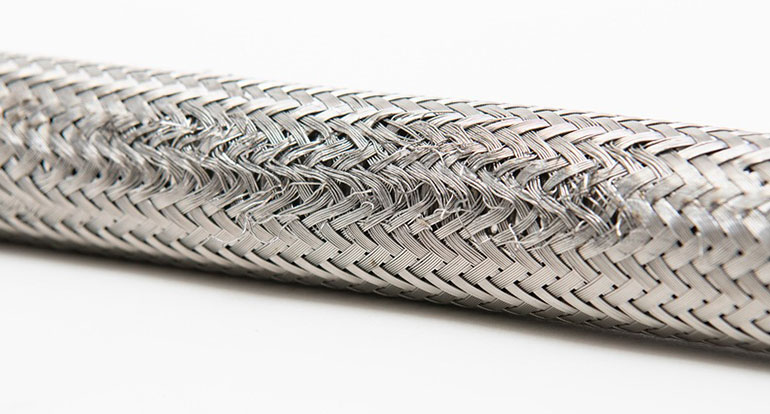
Abrasion remains one of the leading causes of premature hose failure. Over time, repeated contact with machinery or surrounding surfaces can wear away the hose cover. Once the outer layer is compromised, reinforcement materials become vulnerable to damage, significantly increasing the risk of leaks or ruptures.
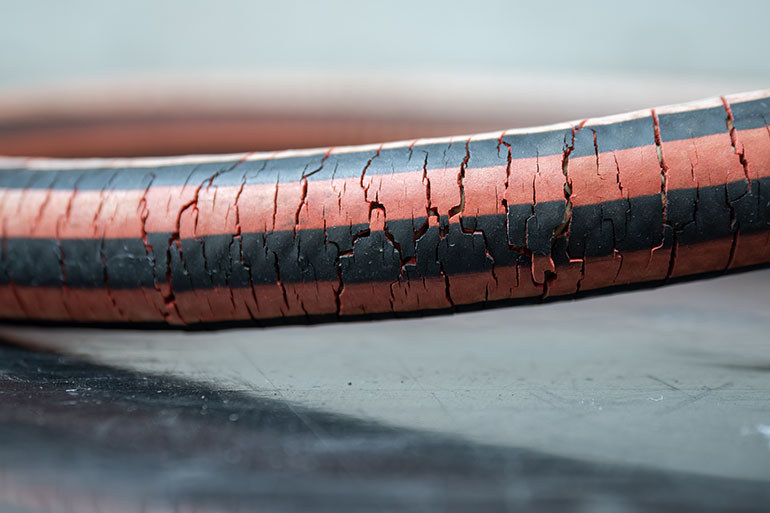
Environmental conditions can also contribute to hose degradation. Excessive heat, ultraviolet exposure, chemical contact, and aging can cause hose materials to become brittle and develop cracks. While these imperfections may appear cosmetic at first glance, they often indicate that the hose is approaching the end of its service life.
Similarly, hoses that are bent beyond their minimum bend radius may develop kinks or permanent deformation, restricting flow and placing additional stress on the assembly. Connection points should also be closely monitored. Corrosion, loose fittings, damaged threads, or signs of leakage around couplings frequently signal developing issues that can lead to failure if left unaddressed.
Bulging or blistering along the hose body should be treated as a serious warning sign. These conditions may indicate internal damage or reinforcement failure and often precede a rupture. Hoses should be thoroughly inspected anytime a system experiences an over pressurization event.
Building a proactive inspection program
The most effective way to reduce hose-related downtime is through a structured inspection and maintenance program. Rather than waiting for failures to occur, facilities should establish routine inspection schedules based on operating conditions and manufacturer recommendations.
Regular visual inspections allow maintenance teams to identify developing issues before they escalate into larger problems. Even simple inspections performed consistently can help detect abrasion, cracking, leaks, or fitting damage early enough to avoid costly repairs.
Documentation is equally important. Tracking hose specifications, installation dates, operating conditions and replacement history enables facilities to better understand service-life expectations and identify recurring issues. This information can support more informed maintenance decisions and improve long-term reliability.
Installation practices matter
Many hose failures can be traced back to installation issues rather than product defects. Improper routing, excessive twisting, insufficient support and exposure to avoidable stress can significantly reduce hose life.
During installation, hoses should be routed to accommodate movement and vibration while maintaining proper bend radius requirements. Contact with abrasive surfaces should be minimized whenever possible and adequate support should be provided to prevent unnecessary strain on fittings and connections.

By addressing these factors during installation, facilities can often prevent many of the premature failures that lead to downtime and maintenance costs later.
Moving beyond a run-to-failure mindset
A common mistake in industrial maintenance is treating hose assemblies as components that only require attention after a failure occurs. While this approach may appear cost-effective initially, it often results in higher overall costs due to emergency repairs and unexpected production interruptions.
Preventive replacement strategies allow facilities to replace critical hose assemblies during scheduled maintenance windows rather than during unplanned shutdowns. For applications where uptime is essential, this proactive approach can significantly reduce operational risk.
Training operators and maintenance personnel to recognize early signs of wear further strengthens these efforts. Employees who interact with equipment daily are often the first to notice changes that may indicate developing problems.
A small investment with significant returns
Industrial hose assemblies may represent only a small fraction of a facility’s overall equipment investment, but their impact on operational reliability is substantial. A single failure can halt production, damage surrounding equipment, create safety risks and generate significant maintenance costs. For many manufacturers, the cost of downtime far exceeds the cost of prevention. Recent industry estimates indicate that large manufacturing operations can lose an average of approximately $260,000 for every hour a critical production line remains offline, making proactive maintenance one of the most cost-effective reliability investments available.
By adopting a proactive approach to inspection and preventive maintenance, manufacturers can improve reliability, enhance workplace safety, minimize the opportunity for impactful environmental releases, extend equipment life and minimize the disruptions associated with unexpected downtime.
In today’s manufacturing environment, where efficiency and uptime are more important than ever, proactive hose maintenance is not simply a maintenance task. It is a strategic investment in operational continuity.
Southeastern Hose Inc.
sehose.com
Filed Under: Components, Engineering Basics, Featured, Hose & Tubing, Hose Assembly Tips
