
By Chad Peters, Product Manager for Equipment & Hydraulic Fittings at Continental
For hose distributors, hose assembly shops and hose service operators, crimping is more than a routine production step. It is the process that joins the hose and fitting so the finished assembly can perform as intended. When the crimp is done correctly, it supports uptime, consistency and confidence in the finished assembly. When it is done incorrectly, the consequences can be detrimental and include unexpected downtime, hazardous leaks and safety risks to employees.
Proper hose crimping is important for everyone involved in hose assembly operations, from the people managing the business to the operators using the equipment every day. The process needs to be accurate, repeatable and easy to follow. In many shops, the expectation is simple: the equipment must work, and the operator needs to be able to complete the task with minimal effort.
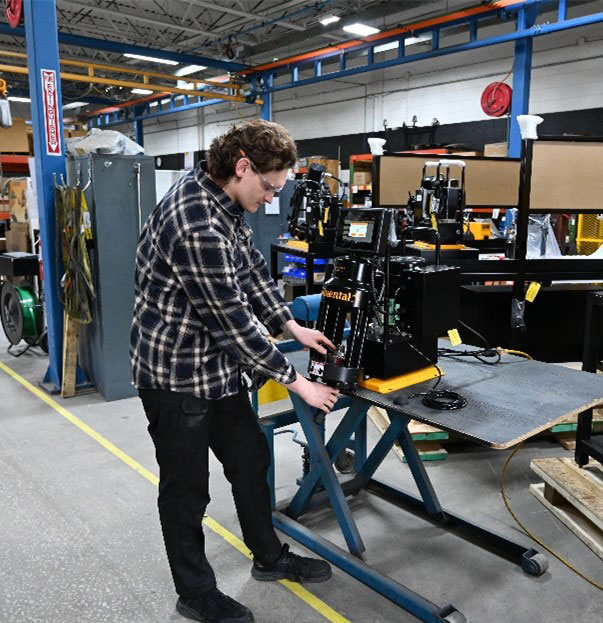
That need for ease of use is increasingly shaping how crimping equipment is designed. Hose assembly has historically relied on more analog processes, including manual measurements and operator precision. As more industrial processes become digital, hose crimping has moved in the same direction.
Why the crimp matters
In hose assembly, the hose and fitting must be properly joined so the components work together as a finished product. The crimping equipment performs that critical function. Even when a shop uses high-quality hose and fittings, the assembly can still fail if the components are not put together correctly.
The risks are not limited to product quality. If a hose and fitting are not assembled properly, there could be a fluid leak, an operator injury or a pressurized assembly failure. A fitting that is not properly secured can also become a projectile, posing an extreme safety hazard. The crimping process affects productivity and, most importantly, safety.
This is one reason repeatability is so important. Hose assembly work involves doing the same task again and again. If each operator approaches the process differently, or if settings are difficult to interpret, the chance of mistakes increases. A more guided process, through digital tools, helps reduce guesswork and supports more consistent results.
Making operators more effective
Many hose assembly shops face workforce challenges, including high turnover in operator roles. That makes training, ease of use and process consistency especially important. A crimping process that depends too heavily on tribal knowledge or manual interpretation can create unnecessary risk when new or less-experienced operators are performing the work.
The operator continues to be one of the most important components in the crimping process. Hose crimping is not fully robotic, and the process is still manual, but smarter equipment can help operators make better decisions and get up to speed faster. The goal is to provide clear guidance, accurate specifications and a process that helps the operator complete the job correctly. That does not remove the need for skill. Instead, it supports the operator with a process that is more straightforward, less dependent on memory and less vulnerable to potentially avoidable errors. When the operator has the right specifications and an interface that clearly directs the work, the shop is better positioned to reduce mistakes.
From analog settings to digital guidance
While the approach is slightly different with digital crimpers, the core function of the crimper continues to be to join the hose and fitting properly. The operator still interacts with the equipment and accesses the information needed to complete the crimp, but an easy-to-use, digital interface puts the necessary settings directly in front of the user, reducing the need to look up information or rely on manual adjustments. This makes the process more intuitive and consistent. In a guided workflow, the operator can select the required hose information, review the specifications and complete the crimp with fewer steps.

This kind of interface can be especially useful in environments where training time is limited or where multiple operators use the same equipment. If the crimper equipment can guide the user through the process, it can help reduce variability from one operator to another.
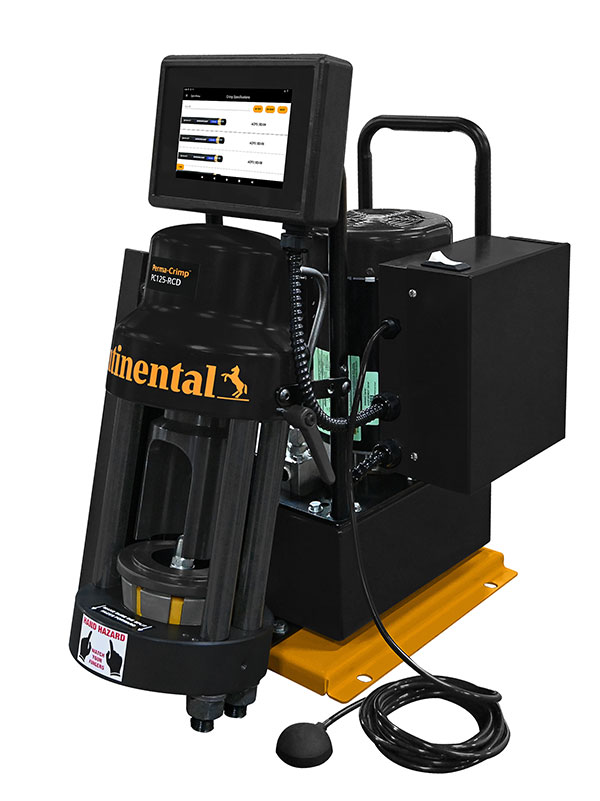
Continental’s new PC125i is one example of how crimping equipment is becoming more digital and connected. The equipment focuses on a three-tap-to-crimp operation, making it easier for the user to select the correct options. It uses ContiTech’s CrimpIQ Pro Mode technology, which provides over-the-air updates and streamlined crimp specification selection to help users achieve consistent, repeatable results. The equipment’s compact design improves portability without compromising performance.
The crimper is compatible with ContiTech’s traceability solutions, including its CrimpCloud hose labeling technology. These labels help distributors and end users simplify aftersales service, support product authentication, and enable assembly fabricator branding using QR-code-based digital connectivity for fast identification and quick replacements.
The PC125i is designed to support hose assembly in multiple environments, including service trucks, field repair, maintenance shops, distributor locations and mobile hose assembly, among others. For operators, the value is in making the crimping process easier to follow. For businesses, the value is in supporting consistency, traceability and confidence across different locations and use cases.
Traceability and the bigger picture
Shops and service operators are under increasing pressure to understand what was assembled, how it was assembled and whether the right process was followed. When crimping is treated as a digital, guided process, it becomes easier to support documentation, consistency and traceability. This is important for service, resale and lifecycle value. A hose assembly does not exist only at the moment it is made. It may be used, serviced, replaced or reviewed later. Built-in traceability support can help connect the assembly process to the broader lifecycle of the product and the equipment it supports.
Reducing downtime and avoiding rework
Hose distributors, assembly shops and service operators cannot afford unnecessary downtime or assembly failures. A crimping mistake can create rework inside the shop, but it can also create problems if an assembly does not perform as expected. Smarter equipment can help mitigate these issues by making the process easier for operators, reducing guesswork and supporting more consistent results. When the process is clear and repeatable, through digital technology, shops are better positioned to avoid mistakes that lead to downtime or safety risks.
Proper crimping is a technical process, and the benefits of digital crimping solutions are plentiful: fewer mistakes, better repeatability, improved traceability and less risk of downtime. As hose assembly operations continue to modernize, crimping equipment is doing more than applying force. It is helping operators make the right crimp, the right way, every time.
Contitech
continental.com
Filed Under: Components, Featured, Hose & Tubing, Hose Assembly Tips
