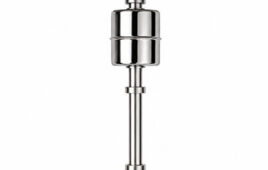
Monitoring a liquid level does not always simply mean knowing whether a tank is full or empty. In many industrial applications, it is necessary to detect multiple thresholds, monitor temperature and use a device that can be configured according to the specific characteristics of the system. This is the need behind IEG-INOX-DN_-PN_, the new electromagnetic […]
Donaldson reservoir headspace dryer controls moisure, extends fluid life

Donaldson Company Inc. has introduced the Donaldson Hy-Pro Reservoir Headspace Dryer. The Reservoir Headspace Dryer (RHD) removes free, emulsified, and dissolved water from hydraulic and lubrication fluids in their reservoirs by generating dry air and circulating it through the headspace. The process enables moisture to transfer from the oil to the dry air stream. The […]
The lowdown on fire-resistant fluids

By Josh Cosford, Contributing Editor For the same reason you should never put your hand on a hydraulic hose to check for leaks, never use traditional hydraulic oil anywhere near a heat or flame source. No, being around a hot ingot or furnace won’t give you injection wounds, but a pinhole spray from a 3,000 […]
Examining the growing importance of zinc-free hydraulic fluids

In an increasing number of end-use applications, zinc-free hydraulic fluids are becoming desirable to minimize impact, particularly in sensitive environments. By Jared Cornett, Product Manager, Industrial Oils, Lubrizol Hydraulic fluids play an important role in making the modern world work. They are found in countless applications that many take for granted, providing essential power transmission […]
Designing your hydraulic systems for winter

By Josh Cosford, Contributing Editor Hydraulic machines hate the cold just as much as the average retired snowbird does. However, a ski slope groomer doesn’t have the luxury of living from November to April in Florida or Arizona to avoid shoveling, brushing off, or walking in snow. Quite the opposite, actually, since no ski resort […]
When should you completely drain your hydraulic system and why?

By Josh Cosford, Contributing Editor If you work with a hydraulic technician who services and repairs hydraulics, especially including work on power units, leave this article for a moment and go ask them, “What’s the craziest thing you’ve seen inside an old reservoir?” My own answer isn’t so memorable; it’s just a half-collapsed suction filter […]
Learn the basics of industrial fluid power maintenance

Having daily, weekly, and monthly checklists helps you keep on top of things like filter maintenance and more. By Josh Cosford, Contributing Editor Everyone thinks they know maintenance and believes they’re successfully running maintenance programs in their factory. This isn’t my first time around the rodeo, because despite my occasional and intentional confusion of metaphors, I…
Lubrizol launches zinc-free hydraulic additive for enhanced environmental protection

Lubrizol has launched Lubrizol AH933ZF, a zinc-free additive package that enables robust performance and user benefits. Zinc-free hydraulic fluids have been increasingly desirable in recent years as regulators, OEMs and other stakeholders seek to minimize potential disruptions in sensitive environmental applications. Suitable for applications like mining, forestry, marine, and construction, Lubrizol AH933ZF delivers against an […]
Clarity line of ashless hydraulic oils meets sustainability goals

Chevron announced the reintroduction of its Clarity line of ashless hydraulic oils, which now includes Clarity EliteSyn AW and Clarity AW. The updated products are designed to support equipment protection and efficiency while meeting growing demand for more environmentally responsible lubricants. Chevron’s Clarity EliteSyn AW and Clarity AW are formulated for heavy-duty equipment used in […]
The dangers of hydraulics and how to prevent them

By Josh Cosford, Contributing Editor “With great power comes great responsibility,” could not be any truer of hydraulics. These wise words, first penned by Voltaire (and not Peter Parker’s uncle Ben), warn us fluid power professionals that the highest power density mechanical transmission method should be respected for its potential to cause harm. High-pressure injection…
Sidewinder fixed-temp drum heaters keep hydraulic fluid viscosity

Python Sleeves + Covers, a brand of Suburban Manufacturing Group, has introduced the Sidewinder fixed-temperature drum heater. The new product offers a plug-and-play option for maintaining consistent material temperatures throughout the year, including during colder seasons. In industrial settings, maintaining raw materials at the correct temperature is important for consistent operations. The Sidewinder fixed temperature […]
Why is hydraulic contamination still an issue?

I’ve got contamination on the brain. In the past couple of weeks, I have edited several articles focused on the perils of contamination and how to prevent it. In our May issue, we talk about the importance of contamination control in agricultural machinery. We also talk industrial contamination control in our June issue, where we […]
Hunting ghosts in your machines with sonar

Air is a troublesome contaminant in hydraulic fluid. Once it enters and becomes entrained, it’s a pain to remove. If it goes undetected or unmitigated, it can delay system response, decrease performance, degrade the fluid, and wreak havoc on hydraulic pumps. “It’s not like the bubbles that rise to the surface in your glass of […]
How do you check for hydraulic leaks?

By Josh Cosford, Contributing Editor Pretty much the only time it’s easy to check for hydraulic leaks is when the power unit and machine are spanking new. The pristine, glossy epoxy paint used on power units makes an excellent canvas for the soft amber sheen of hydraulic oil. And to be fair, testing and startup […]
Hydraulic fluid is the lifeblood of jellyfish robots

Rob Shepherd, professor of mechanical engineering at Cornell University, wants to make agile robots that can operate untethered for longer — and he’s using hydraulic fluid to do it. “Hydraulic fluids are a great way to get high power output from robots, but people prefer to use batteries powering dc motors,” he said. “I started…
How does fluid selection affect hose assemblies?

By Josh Cosford, Contributing Editor Hydraulic hoses are constructed from a combination of soft polymers and wire reinforcements, most commonly made from high-tensile steel. Although the choice of hydraulic fluid plays little role in the degradation of steel, the materials chosen for the inner tube and outer cover are affected by the fluid you run […]
Bio-Ultimax 1200LT hydraulic fluids conquer cold weather challenges

Renewable Lubricants’ Bio-Ultimax 1200LT hydraulic fluids are environmentally friendly, biosynthetic formulas that provide outstanding reliability in low-temperature conditions. These ultimately biodegradable fluids help users avoid the nagging problems of winter, including slow startup, sluggish performance, seal leaks and moisture contamination. Bio-Ultimax 1200LT outperforms mineral oil-based options, maintaining cold temperature pumpability down to –40°C (–40°F) with […]
How do you prevent microbes in hydraulic oil?

By Josh Cosford, Contributing Editor Microbes aren’t the most common contaminant in hydraulic oil, but they do become a problem when conditions are ripe for their proliferation. Anaerobic bacteria of various forms are the most common to be found within hydraulic fluid, although it’s not unheard of to see fungi (molds and yeasts) in very […]
Hydraulic oil analysis part 8: a round-up of all oil analysis tests

By Josh Cosford, Contributing Editor As the last article in the series on laboratory-based hydraulic oil analyses, we thought we’d provide a single article to recap the tests in one convenient location. For the past six months we’ve discussed just as many topics important to your predictive maintenance program. Each one of these parameters is […]
Hydraulic oil analysis part 7 – additives keep fluids performing optimally

By Josh Cosford, Contributing Editor Although a hydraulic machine could run off highly crude forms of hydrocarbons, without a complement of additives, the performance and longevity of your hydraulic machine would suffer. Welcome to Part Seven of the Hydraulic Oil Analysis series, where we dig deep into the various additives that are always or usually […]
Where does built-in hydraulic contamination come from?

By Josh Cosford, Contributing Editor When I sat in my first fluid power class 18 years ago, I remember learning about built-in contamination and how the reservoir was the biggest offender. The welds and their slag were the biggest problems, the teacher stated, but a close second was the debris from pipe threading machines. Looking […]
New biodegradable fluid meets environmental and performance standards

A closer look at Chevron’s Bio EliteSyn AW biodegradable hydraulic fluid. Concern continues rising over stern tube leakages and operational discharges that were once considered part of normal operation in marine vessels. A popular 2010 study estimated that marine shipping vessels leak 4.6 to 28.6 million liters of lubricating oil from stern tubes annually and […]
Hydraulic oil analysis part 6 — what is spectrometry?

By Josh Cosford, Contributing Editor This is part 6 in this series on hydraulic oil analysis, and if you’ve missed any of the previous issues, you can find them here — part 1, part 2, part 3, part 4, and part 5. I’ve covered everything from viscosity to water saturation already, and we’re not done […]
Chevron introduces Clarity Bio EliteSyn AW sustainable hydraulic fluids

Chevron has introduced its Clarity Bio EliteSyn AW, a hydraulic fluid designed to meet the evolving needs of the marine and construction industries while championing environmental stewardship. As governments worldwide tighten regulations to protect our planet, Chevron remains at the forefront of introducing new options to support those initiatives, launching Clarity Bio EliteSyn AW as […]
Hydraulic oil analysis part 5 — acidity and its impacts

By Josh Cosford, Contributing Editor In part 5 of this series covering hydraulic oil analysis, we move on to discuss acidity. As it pertains to hydraulic oil, we need to know the total amount of acidic substances found within the sample. Most commonly referred to as the Total Acid Number, or TAN for short, the […]