
By Ron Marshall, Contributing Editor
I have spent more than two decades traveling from plant to plant performing compressed air audits, and over the years I’ve learned one frustrating truth: sometimes the hardest part of an audit was not diagnosing the system but simply getting good data.
Like many compressed air auditors, I have driven thousands of miles carrying pressure sensors, flow meters, and data loggers into noisy compressor rooms. More than once, I have returned to a plant only to discover a dead battery, a disconnected wire, or a valve that someone had accidentally closed during the test period. Entire trips were wasted.
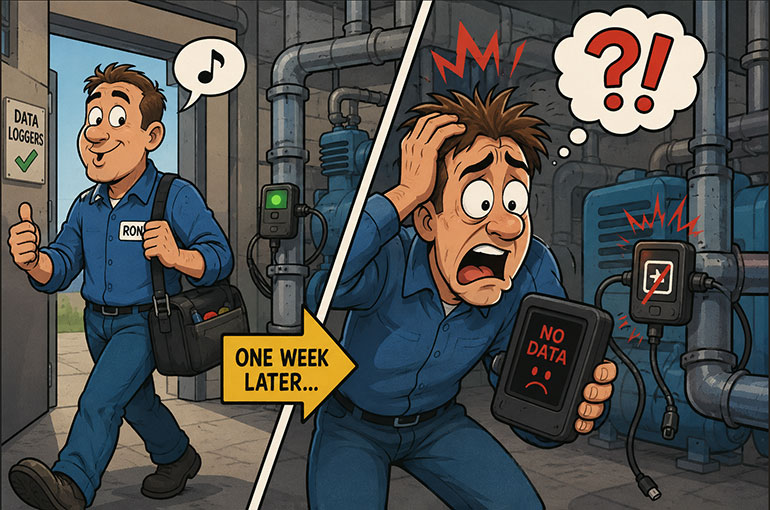
One failed logging session especially stood out. I had driven for hours to install monitoring equipment at a remote plant. Everything appeared normal when I left. But upon returning a week later, I discovered an isolation valve had been closed shortly after installation, leaving the flow meter with almost no usable data. The customer was frustrated, and we now needed to start the entire process all over again.
For years, situations like this were simply accepted as part of compressed air auditing. Then cell-connected monitoring systems began changing everything.
The first time I used a connected monitoring system, I immediately saw the difference. Instead of waiting days or weeks to retrieve information, I could now monitor pressure, power, flow, and compressor performance remotely from my laptop or phone.
That technology quickly proved its value at a bean processing facility that had installed a new variable speed drive compressor. Minutes after startup, I noticed the pressure settings were too high, and the compressor was spending too much time unloaded. In the past, this problem might not have been discovered until long after I had left. Instead, I called immediately, the settings were corrected on the spot, and system efficiency improved before the project was even completed.
At another meat processing facility, the remote dashboard showed that the least efficient compressor was doing most of the work while a newer VSD unit sat nearly idle. A simple pressure adjustment corrected the issue and saved the plant approximately $10,000 per year in electricity costs.
The biggest surprise came from a sawmill located more than 1,200 miles away. Without leaving my office, I was able to view live system data and realize the compressors were operating inefficiently. After guiding the maintenance team through a few control changes remotely, the plant reduced wasted energy enough to save roughly $22,000 annually.
Today, I believe connected monitoring systems are transforming compressed air auditing. Problems that once took weeks to discover can now be identified in minutes. For auditors, service providers, and plant personnel alike, these systems mean faster troubleshooting, lower operating costs, and fewer surprises.
Filed Under: Air Compressors, Components, Components, Compressed Air Technologies, Engineering Basics, Pneumatic Tips, Positioning sensors, Pressure Sensing
